 lop News
The clock is running.
On Saturday, President Donald Trump gave Iran 48 hours to fully reopen the Strait of Hormuz or face the destruction of its power grid. “Within 48 HOURS from this exact point in time, the United States of America will hit and obliterate their various POWER PLANTS, STARTING WITH THE BIGGEST ONE FIRST,” he wrote on Truth Social.
Iran’s response was unequivocal. If Trump executes his threat, the Revolutionary Guards said, the Strait of Hormuz “will be completely closed and will not be opened until our destroyed power plants are rebuilt.” Iranian military spokesman Ebrahim Zolfaqari added that all energy, information technology, and water desalination infrastructure belonging to the United States and Israel in the region would be targeted.
The deadline expires Monday. What happens next could determine whether the three-week-old war remains a regional conflict or becomes a global economic crisis.
The Dual Threat
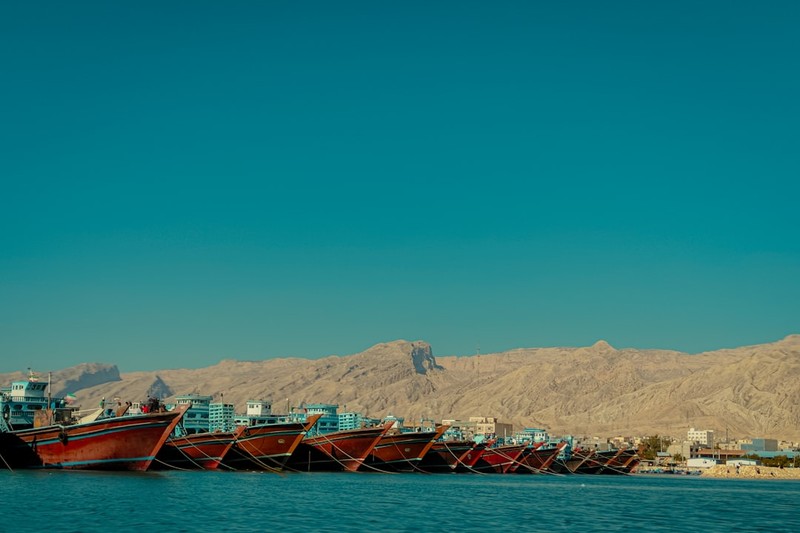
Iran has framed its retaliation on two tracks. The first is the strait itself — the 21-mile-wide chokepoint through which roughly 20 million barrels of oil pass daily, about one-fifth of global supply. Iran has restricted traffic since the war began, but stopping it entirely would be something else.
The second track targets the Gulf states themselves. Iranian Parliament Speaker Mohammad Bagher Qalibaf warned that critical infrastructure across the region, including energy and desalination facilities, would be “irreversibly destroyed.”
This is not theoretical. Desalination plants produce 100% of drinking water in Bahrain and Qatar, more than 80% in the United Arab Emirates, and 50% in Saudi Arabia’s water supply. According to the Center for Strategic and International Studies, roughly 100 million people in the Middle East depend on desalinated water. The facilities are large, fixed, coastal complexes concentrated within 350 kilometers of Iran — vulnerable to missile strikes, drone attacks, and cyber operations.
“If this continues, it will make a good part of the Middle East not livable for a long time,” said Alex Vatanka of the Middle East Institute.
Damage has already occurred. Reports indicate desalination plants in the UAE, Kuwait, and Bahrain have suffered missile-related damage since the conflict began. On March 8, Bahrain alleged an Iranian drone struck a desalination center.
The Economic Shock
The threat to Hormuz has already convulsed global markets. Brent crude climbed to $114.09 a barrel on Sunday, up nearly 50% since the start of the war. U.S. crude passed $100. The average American gallon of gas reached $3.94 — up almost a dollar since the start of the war.
International Energy Agency chief Fatih Birol said Sunday that the current disruption is “more serious than the two oil crises in 1973 and 1979 combined, and more serious than the gas crisis sparked by Russia’s invasion of Ukraine.”
“Today we lost 11 million barrels — so more than two major oil shocks put together,” Birol said. At least 40 energy assets across nine countries have been severely damaged.
The economic timeline is unforgiving. Energy analyst John Kilduff of Again Capital told CNBC that if the strait is not reopened by the end of March, the resulting 10 to 12 million barrel per day deficit would be “really just insurmountable.” Shortages would hit India, Japan, and South Korea first, then spread. Goldman Sachs has suggested oil prices could remain elevated through 2027.
The Military Reality
On the ground, the war continues to intensify. Iranian missiles struck the southern Israeli towns of Arad and Dimona overnight Saturday, wounding at least 175 people near the Negev nuclear research center. Prime Minister Benjamin Netanyahu called it a “miracle” no one was killed. Israel’s military said it failed to intercept the missiles that hit near the nuclear site.
Iran has also deployed long-range ballistic missiles for the first time, with ranges up to 4,000 kilometers. One was fired toward a U.S.-British military base in the Indian Ocean.
Ali Abdollahi Aliabadi, commander of Iran’s Khatam al-Anbiya Central Headquarters, said Iran’s military doctrine has “changed from defensive to offensive.”
The war, launched by the U.S. and Israel on February 28, has killed more than 2,000 people.
Limited Options
Trump’s 48-hour ultimatum came just two days after he declared victory in the war. The shift has drawn criticism from both parties.
“Trump has no plan to reopen the Strait of Hormuz, so he is threatening to attack Iran’s civil power plants,” said Senator Ed Markey of Massachusetts. “This would be a war crime.” Senator Chris Murphy of Connecticut said the president has “lost control of the war and he is panicking.”
Geoffrey Corn, a law professor at Texas Tech and retired Army lieutenant colonel, described Trump’s social media post as having “a feeling of ready, fire, aim.”
On Friday, Trump’s Treasury Department lifted sanctions on some Iranian oil for the first time in decades — a tacit acknowledgment that economic pressure alone has not worked. NATO Secretary-General Mark Rutte said more than 20 countries are working to implement a resolution, but details remain scarce.
Treasury Secretary Scott Bessent defended the administration’s approach on NBC’s “Meet the Press,” saying “sometimes you have to escalate to de-escalate.” He added that Americans would accept “temporary elevated prices” if it meant decades of peace in the Middle East.
What the Deadline Means
When the 48 hours expire, Trump faces a binary choice: follow through on his threat to attack Iranian infrastructure, or back down. Iran has signaled it will not capitulate.
“It is unlikely Tehran will cave into the pressure,” said Aniseh Bassiri Tabrizi of Chatham House.
If Trump orders the strikes, Iran has promised to close Hormuz completely. The Revolutionary Guards’ statement that the strait would remain closed until destroyed power plants are rebuilt suggests a timeline measured in months or years, not days.
Amnesty International has warned that attacks on essential services could “in some cases amount to war crimes.” WHO Director-General Tedros Adhanom Ghebreyesus said attacks on nuclear sites create “an escalating threat to public health and environmental safety.”
For now, the strait remains partially open. Iran’s representative to the UN’s International Maritime Organisation, Ali Mousavi, claimed the waterway is open to all traffic except “Iran’s enemies.” Whether that changes on Monday may depend on whether Trump decides that obliterating power plants is worth closing the world’s most critical waterway indefinitely.
The question markets are asking is no longer whether prices will rise. They already have. The question is whether one-fifth of global oil traffic stops moving — and what happens to the global economy if it does.
Sources
- Iran threatens to ‘completely’ close Strait of Hormuz and hit power plants after Trump ultimatum — AP News
- Iran threatens to cripple Gulf water and energy systems after Trump ultimatum — France 24
- Iran threatens to retaliate against Gulf energy and water after Trump ultimatum — Channel News Asia
- Trump’s changing course on Strait of Hormuz strategy raises questions about US war preparation — AP News
- Iran unswayed by Trump’s 48-hour deadline and threats to ‘obliterate’ energy infrastructure — NBC News
- Oil prices rise after Trump issues ultimatum and Iran threatens to close Strait of Hormuz — CNN
- The economy has Strait of Hormuz deadline for Trump: Two weeks — CNBC
- Could Iran Disrupt the Gulf Countries’ Desalinated Water Supplies? — Center for Strategic and International Studies
- Iran vows to destroy Middle East water and energy facilities if US attacks power plants — The Guardian
- Middle East crisis live: Iran threatens to destroy water and energy infrastructure — The Guardian