 lop News
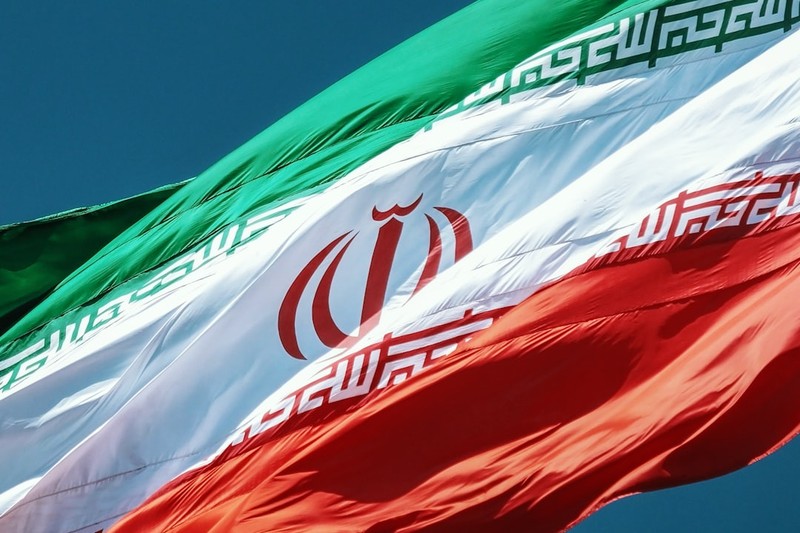
On Friday, President Donald Trump said the United States was “getting very close to meeting our objectives” and considering “winding down” its military campaign against Iran. On Saturday night, he threatened to destroy the country’s power grid.
The whiplash took less than 24 hours.
“If Iran doesn’t FULLY OPEN, WITHOUT THREAT, the Strait of Hormuz, within 48 HOURS from this exact point in time, the United States of America will hit and obliterate their various POWER PLANTS, STARTING WITH THE BIGGEST ONE FIRST!” Trump posted on Truth Social from his Florida residence.
This is not another rhetorical volley. It is a countdown with a named target list — and it marks the most concrete escalation trigger since the war began on February 28.
A Clock on Civilian Infrastructure
Iran’s largest power plant is the Bushehr Nuclear Power Plant, a commercial reactor on the Persian Gulf coast, according to CBS News. Striking it would raise immediate questions about radioactive contamination in a densely populated region. But beyond Bushehr, Iran’s electrical grid serves roughly 88 million people. Destroying “various power plants” — Trump’s words — would mean hospitals going dark, water treatment systems failing, and refrigeration chains collapsing across a country already absorbing heavy bombardment.
More than 2,000 people have been killed in Iran since the U.S. and Israel began strikes on February 28, according to Reuters. The threat to civilian power infrastructure would add a dimension of suffering that even the war’s critics have not yet had to reckon with.
Iran’s military responded immediately. The operational command Khatam Al-Anbiya warned that “if Iran’s fuel and energy infrastructure is violated by the enemy, all energy, information technology and desalination infrastructure belonging to the US and the regime in the region will be targeted,” according to a statement carried by Iran’s Fars news agency. Gulf states — several of which depend on desalination for drinking water — will have read that sentence carefully.
The Strait That Holds the World Hostage
The Strait of Hormuz carries roughly a fifth of global crude oil and liquefied natural gas in peacetime. Iran has effectively closed it since the war began, and the economic consequences have been severe: European natural gas prices surged as much as 35 percent in a single week after Israel struck Iran’s largest gas field, according to Channel News Asia. The European Union urged members to lower gas-storage targets and start refilling reserves gradually to curb demand, the Financial Times reported. Fuel inflation is biting consumers worldwide and has become a growing political liability for Trump ahead of November’s congressional elections.
Trump’s ultimatum appears designed to force Iran’s hand on the strait while projecting strength at home. But the framing sits uneasily alongside his own Friday statement that other nations — not the United States — should police the waterway. “The Hormuz Strait will have to be guarded and policed, as necessary, by other Nations who use it — The United States does not!” he wrote, barely hours before issuing a unilateral deadline.
The 22-nation coalition that this week expressed “readiness to contribute to appropriate efforts to ensure safe passage” through the strait has not endorsed military strikes on Iranian civilian infrastructure. Major diplomatic players — France, Germany, Japan, and the United Kingdom among them — signed that statement as a signal of willingness to help reopen shipping, not to back an escalation of this magnitude.
India and Japan have separately negotiated limited passage for their own vessels, with Tehran allowing select tankers through — a quieter, transactional diplomacy running in parallel to the American ultimatum.
A War Moving in Multiple Directions
The deadline landed on a day when the war was already lurching into uncharted territory. Iran fired two 4,000-kilometre-range ballistic missiles at the joint U.S.-UK base at Diego Garcia in the Indian Ocean — the first time Tehran has deployed long-range missiles since the conflict began, according to Israeli military chief General Eyal Zamir.
“Their range reaches European capitals — Berlin, Paris and Rome are all within direct threat range,” Zamir said.
Separately, Iranian missiles struck the southern Israeli towns of Dimona and Arad, injuring at least 90 people, including children. Israeli air defences failed to intercept the strikes — a significant operational failure given Dimona’s proximity to Israel’s nuclear research centre, about 13 kilometres southeast of the town according to Reuters. “This has been a very difficult evening in the battle for our future,” Prime Minister Benjamin Netanyahu said.
The head of U.S. Central Command, Admiral Brad Cooper, asserted Saturday that Iran’s ability to threaten the strait had been “degraded,” citing strikes on underground anti-ship missile storage facilities with 5,000-pound bombs. The U.S. has hit 8,000 targets and 130 Iranian vessels in three weeks, according to CENTCOM. Yet Iran continues to fire missiles that reach farther than anticipated, and the strait remains closed.
The Gap Between Words and Clocks
Trump’s administration has sent contradictory signals throughout this war. Goals have shifted from regime change to nuclear disarmament to strait security and back, often within the same news cycle. Allies have struggled to calibrate their responses. The deployment of three additional amphibious assault ships and 2,500 Marines to the region — confirmed by U.S. officials to the Associated Press — does not look like winding down.
The 48-hour clock is now ticking. Whether it expires into action or another round of rhetoric will depend on decisions made in Tehran, Washington, and a dozen capitals in between. What is certain is that 88 million Iranian civilians are now named as leverage in a negotiation conducted by social media post.
Sources
- Trump threatens to ‘obliterate’ Iran power plants unless Hormuz opens — Channel News Asia
- Trump says US considering ‘winding down’ Iran war as Tehran fires long-range missiles — Channel News Asia
- Trump threatens attacks on Iran’s power plants if Tehran doesn’t reopen Strait of Hormuz in 48 hours — AP News
- Trump issues Hormuz ultimatum, threatens to ‘obliterate’ Iran’s power plants — South China Morning Post
- Trump threatens Iran with power plant strikes over Hormuz blockade — Al-Monitor (Reuters)
- Live Updates: At least 90 wounded in Iranian strikes on Israel, Trump threatens to ‘obliterate’ Iran’s power plants — CBS News