 lop News
Thirty years to get here. Three weeks to shelve it.
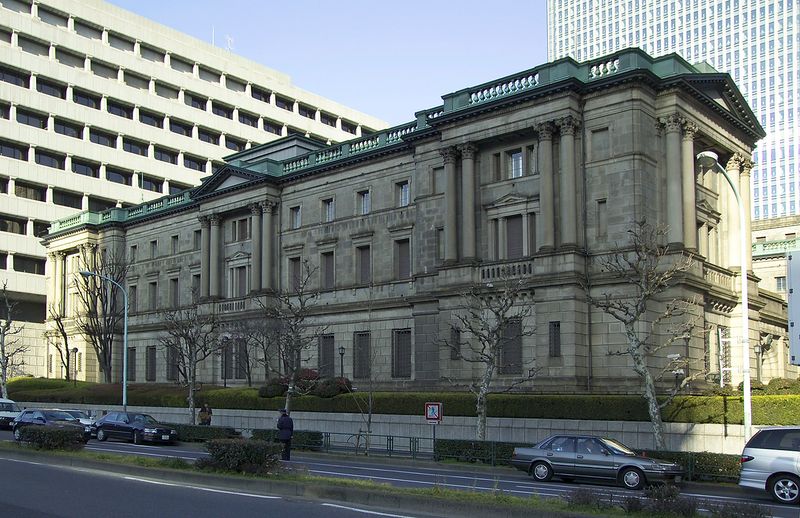
The Bank of Japan held its policy rate at 0.75% on Thursday, keeping powder dry as the Iran war sends oil prices into triple digits and throws the most ambitious monetary normalization in a generation into doubt. The vote was 8-1 — hawkish board member Hajime Takata, who wanted a push to 1.0%, was the lone dissenter. The man has conviction, if not the votes.
The Rug Pull
As recently as January, the path looked clear. The BOJ had raised rates to a 30-year high in December. Governor Kazuo Ueda had signaled that underlying inflation was moving toward the 2% target. Economists were penciling in another hike as early as April. The wage-price cycle that Japan had spent decades praying for was finally showing vital signs.
Then the U.S. and Israel launched strikes on Iran on February 28, and the Strait of Hormuz — through which 70% of Japan’s oil imports travel — effectively closed.
Brent crude, which sat around $70 a barrel before the conflict, has since surged past $100, touching nearly $110 on Wednesday after Iran vowed to escalate. For most economies, that is an unwelcome inflation tax. For Japan, which imports 95% of its crude from the Middle East, it is an existential energy problem. Prime Minister Sanae Takaichi authorized the largest-ever release from Japan’s strategic petroleum reserves this week — 45 days’ worth — a move that underscores just how seriously Tokyo is treating the disruption.
The Central Banker’s Trap
The BOJ’s post-meeting statement pointed to “upward pressure” on inflation from rising crude prices. That is a polite way of describing a policy trap.
Higher oil costs feed directly into consumer prices. Japan’s headline inflation had shown signs of cooling before the conflict, but that was before war-driven energy costs began filtering through to transport and utility bills. The weaker yen — hovering near multi-decade lows — amplifies every dollar of imported fuel. On paper, accelerating inflation argues for tighter policy.
But here is the bind: the same oil shock that stokes prices also threatens to choke the growth that makes rate hikes sustainable. Asia accounts for roughly half of global manufacturing output, and energy price shocks ripple through production costs, shipping, and consumer spending simultaneously. Goldman Sachs estimates the conflict will shave 0.3 percentage points off global GDP growth and add 0.5 to 0.6 points to inflation over the next year. That is stagflation math, and central bankers do not have a good playbook for it.
Ueda, in his post-meeting briefing, framed the balance carefully — acknowledging the need to support a shock-hit economy while avoiding falling behind the curve on prices. Translation: we will wait and see, and hope the war ends before we have to choose.
The Second Domino
The BOJ was not the first to flinch this week. On Wednesday, the Federal Reserve held its benchmark rate at 3.5–3.75% for a second consecutive meeting, calling the economic implications of the Middle East conflict “uncertain.” Chair Powell added that “we just don’t know” how everything will play out. Fed officials still project one rate cut this year but revised their inflation forecasts higher — a hedge that says, in central-banker-speak, “we have no idea what happens next.”
The parallel is instructive. Both the Fed and the BOJ entered 2026 with clear trajectories — the Fed was expected to continue cutting, the BOJ to continue hiking. The Iran war has frozen both in place, though for opposite reasons. The Fed cannot cut into rising inflation. The BOJ cannot hike into a growth shock. They are stuck on the same ice, facing different directions.
For Japan, the stakes are arguably higher. The Fed has been raising and lowering rates for decades; it is a familiar exercise. The BOJ is attempting something it has not done since the 1990s — sustain a tightening cycle in an economy that has spent a generation fighting deflation. Every delay risks losing momentum. If the war drags on and oil stays elevated, the window for normalization narrows further.
What Comes Next
Before the conflict, market consensus had the next BOJ hike arriving as early as April. That timeline is now dead. ING Economics projects the next move will not come until October at the earliest, and even that assumes the Strait of Hormuz reopens and oil retreats toward pre-war levels.
The uncomfortable truth is that Japan’s monetary policy is now hostage to a war it has no influence over, fought over a waterway it cannot do without. Thirty years of patience brought the BOJ to the threshold of normal monetary policy. Three weeks of missiles may have pushed it back.
Sources
- Bank of Japan keeps rates steady as expected, warns Iran war may push up inflation — CNBC
- Fed votes to hold rates steady, notes ‘uncertain’ impacts from Iran war — CNBC
- How the War With Iran Is Impacting Economies in Asia — TIME
- Middle East conflict poses fresh test to central banks as oil shock fuels inflation — CNBC
- Japan begins its largest-ever oil release from strategic reserves — The Japan Times
- Iran Conflict: Oil Price Impacts and Inflation — Morgan Stanley
- Further Bank of Japan hikes are expected, but not imminent — ING THINK
- Oil prices hit nearly $110 as Iran vows to escalate the war — Fortune