 lop News
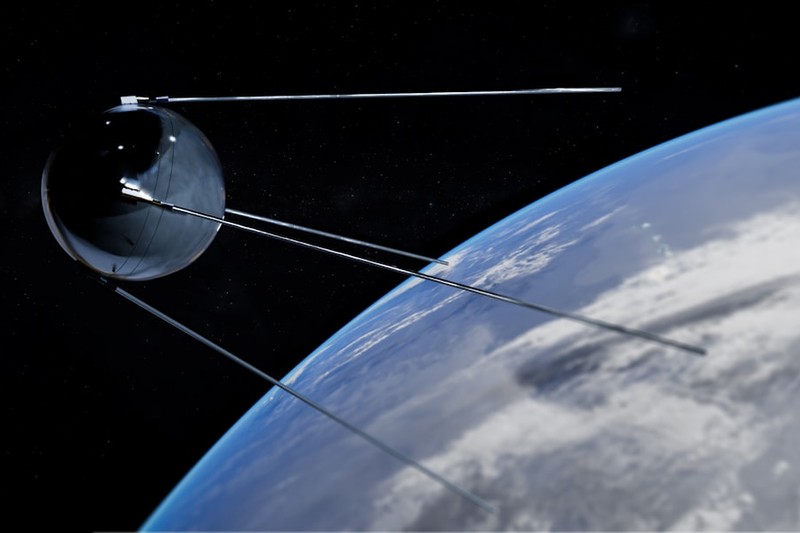
Two rocket flights. Zero satellites in orbit. Fifty-one thousand six hundred planned.
That is the arithmetic behind Project Sunrise, the orbital data center constellation that Jeff Bezos’s Blue Origin filed with the Federal Communications Commission on March 19. The company wants to loft up to 51,600 satellites into sun-synchronous orbits between 500 and 1,800 kilometers altitude, each orbital plane packed with 300 to 1,000 spacecraft communicating by laser link. The pitch: shift power-hungry AI compute off-planet, where solar energy is free and permitting fights don’t exist.
The catch is everything else.
The Vision on Paper
Blue Origin’s 14-page FCC application frames Project Sunrise as a pressure valve for Earth’s strained infrastructure. “The insatiable demand for AI workloads has led to the rapid buildout of terrestrial data centers globally,” the filing states. “Space-based data centers will be a complement to terrestrial infrastructure by introducing a new compute tier that operates independently of Earth-based constraints.”
The satellites would rely on optical intersatellite links and route traffic through TeraWave, a separate Blue Origin broadband constellation of 5,408 satellites announced in January. TeraWave would serve as the communications backbone connecting the orbital computers to the ground. Blue Origin has not launched a single TeraWave satellite. The company says it plans to begin deploying them before the end of 2027.
Project Sunrise, in other words, depends on a network that also doesn’t exist yet.
The Hardware Gap
Blue Origin’s New Glenn rocket — the vehicle the company says will enable all of this — has flown twice, according to Ars Technica. For context, SpaceX’s Falcon 9 has completed more than 600 launches and currently operates over 10,000 Starlink satellites. SpaceX filed its own orbital data center application in late January, seeking permission for up to one million satellites.
The startup Starcloud has proposed 88,000 satellites of its own. Google’s Project Suncatcher plans a demonstration mission for 2027. Even China has begun launching spacecraft for its Xingshidai space data center constellation, according to Scientific American.
Blue Origin is entering a crowded race with the thinnest track record of any major competitor. The company asked the FCC to waive the standard milestone requirement — half the constellation deployed within six years of approval — arguing that because it’s seeking Ka-band spectrum on a non-interference basis, it wouldn’t be “warehousing” spectrum. Translation: give us the parking spot now; we’ll figure out the car later.
The Regulator Problem
FCC Chairman Brendan Carr may not be sympathetic. When Amazon — also controlled by Bezos — petitioned the FCC to deny SpaceX’s million-satellite application, Carr fired back publicly. “Amazon should focus on the fact that it will fall roughly 1,000 satellites short of meeting its upcoming deployment milestone rather than spending their time and resources filing petitions against companies that are putting thousands of satellites in orbit,” he said, referring to Amazon’s July 2026 deadline to deploy half of its separate Amazon Leo broadband constellation.
SpaceX noticed the irony too. It filed an objection to Blue Origin’s application by simply resubmitting Amazon’s own petition against SpaceX, requesting the FCC “apply the substantive and procedural arguments in Amazon’s petition to Blue Origin’s application.” Starcloud CEO Philip Johnston called it “one of the funniest responses to an FCC filing of all time,” according to GeekWire.
The Physics Tax
Beyond regulatory hurdles, the engineering remains genuinely hard. Benjamin Lee, a computer architect at the University of Pennsylvania, told Scientific American that orbital hardware must be shielded from high radiation and cooled by large radiators that add significant launch mass. Google’s Suncatcher team estimates launch costs would need to fall below $200 per kilogram by 2035 for space data centers to make economic sense.
Then there’s the environmental question. Researchers at Saarland University in Germany calculated that an orbital data center could produce an order of magnitude greater emissions than a terrestrial one when accounting for rocket launches and atmospheric reentry of spent hardware. Astronomers worry about light pollution in the twilight hours critical for tracking near-Earth asteroids.
Experts who spoke to TechCrunch said projects of this scale are unlikely to come to fruition until the 2030s.
Ambition vs. Execution
This is Bezos’s third megaconstellation. Amazon Leo is behind schedule. TeraWave is a press release. And now Project Sunrise asks us to believe that the same organization juggling New Glenn, a lunar lander program, a space station called Orbital Reef, and a vehicle called Blue Ring can also build and operate the second-largest satellite constellation ever proposed.
The demand for orbital compute may well be real. The question is whether filing an FCC application counts as progress or just as staking a claim. Right now, Project Sunrise looks less like engineering and more like a land grab in an orbit that doesn’t have land.
Sources
- Jeff Bezos just announced plans for a third megaconstellation—this one for data centers — Ars Technica
- Jeff Bezos’ Blue Origin enters the space data center game — TechCrunch
- Jeff Bezos’ rocket company Blue Origin applies to launch 51,000 datacenter satellites — The Register
- Blue Origin joins the orbital data center race — SpaceNews
- 51,600 more satellites? Blue Origin adds another twist to the data center space race with Project Sunrise — GeekWire
- Data Centers in Space Aren’t as Wild as They Sound — Scientific American