 lop News
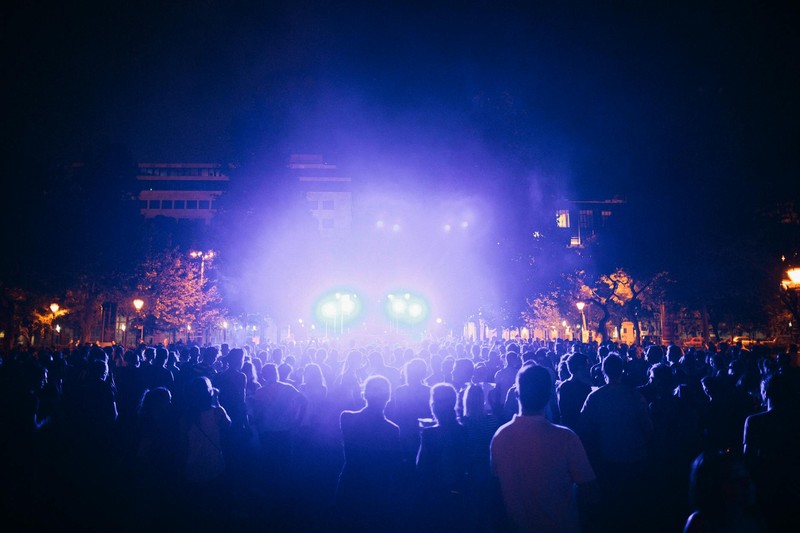
Two hundred and sixty thousand people standing in the middle of a capital city, traffic stopped, museums shuttered, 15,000 police officers on duty — all for a band that hasn’t performed in nearly four years. In most entertainment industries, that silence would be a career obituary. For BTS, it was a countdown.
On Saturday evening, the seven members of the South Korean supergroup walked out in front of Gwanghwamun Gate — the medieval entrance to Gyeongbokgung Palace — and reclaimed central Seoul as their stage. “Hi Seoul! We’re back!” said RM, the group’s leader, according to Deutsche Welle. The crowd, which had been chanting the band’s name for hours, did not need convincing.
The Numbers Behind the Noise
The free open-air concert drew an estimated 260,000 people to the Gwanghwamun district, according to Seoul authorities cited by Euronews. Of those, 22,000 held free seated tickets directly in front of the stage. The rest watched on a dozen large screens stretching blocks down the main road. Millions more tuned in via Netflix, which live-streamed the show to 190 countries.
The logistics were staggering. Police cordoned off large sections of central Seoul, halting road and rail movement in parts of the city for nearly 30 hours, according to Deutsche Welle. Around 15,000 to 16,000 police and security personnel were deployed — a figure that drew criticism from some quarters. Pop music critic Jung Min-jae warned on X that allowing a concert “of this scale, one that effectively paralyses parts of the city centre” set a precedent Seoul would struggle to manage, according to the BBC.
But for the South Korean government, the calculation was straightforward: BTS is a national export.
Four Years Is a Lifetime in K-Pop
The group’s hiatus began in 2022, when members started rotating into South Korea’s mandatory military service — a compulsory stint of roughly 18 to 21 months for all able-bodied men. The last member completed service in June 2025, according to Deutsche Welle. In an industry where new acts debut monthly and fan loyalties can shift by the algorithm cycle, a four-year gap is the kind of risk that breaks groups.
BTS’s bet was that their fanbase — the self-styled “Army” — would hold. It held. Band member J-Hope acknowledged the anxiety on stage: “There were moments when we wondered whether we had been forgotten. Or whether you would still remember us,” he told the crowd, according to Euronews. Jimin added: “We are not special people. We are afraid every time. But we believed that our sincerity would reach you.”
The evidence suggests sincerity was not the only factor. The group’s new album, Arirang, released a day before the concert, sold nearly four million copies within 24 hours, according to their label, as reported by Euronews. Spotify logged five million pre-saves — a record for a K-pop act — and Arirang became the platform’s most-streamed album in a single day so far in 2026.
A Stage With a Statement
The choice of Gwanghwamun Square was deliberate. The site sits at the symbolic heart of Seoul, a place where South Koreans have gathered to mourn, protest, and celebrate through years of political upheaval. Suga told the crowd the venue and the album’s title — named after a centuries-old Korean folk song about separation and resilience — were meant to “reflect our identity,” according to the BBC.
The concert opened with a toll of the Divine Bell of King Seongdeok, woven into “Number 29” from the new album, before launching into “Body to Body.” Old hits followed: “Butter,” “MIC Drop,” “Dynamite.” The night closed not with a banger but with “Mikrokosmos,” a 2019 track about self-worth and hope, as light sticks spread across the square like a low-hanging galaxy.
The Tour Machine Cranks Up
Saturday was an opening act. BTS’s global comeback tour begins on 9 April in Goyang, South Korea, and spans 82 shows across 34 cities in 23 countries, wrapping roughly eleven months later in Manila, according to Euronews. Revenue projections run into the billions.
Music critic Lim Hee-yun framed the stakes in national terms for the BBC: South Korea, despite its wealth, had sometimes felt culturally overshadowed by the West. Then came BTS filling Western stadiums, prompting tens of thousands of “blue-eyed Westerners” to sing along in Korean — what Lim called “the ultimate kookbbong,” a slang term for intense national pride.
Whether the group can sustain this momentum through a year-long tour with a more experimental album remains an open question. Fan Kim Young-hee told the BBC she found Arirang “a bit harder to digest” on first listen, but conceded that “BTS never disappoints us” after the live show.
Four years away, four million albums in a day, a quarter-million people in a public square. Whatever K-pop’s shelf life is supposed to be, nobody told BTS.
Sources
- Pop megastars BTS electrify historic centre of Seoul with comeback concert — BBC News
- K-pop BTS makes comeback in Seoul: 260,000 fans, millions watching on screens — Euronews
- K-pop giants BTS celebrate return with Seoul concert — Deutsche Welle
- BTS takes over central Seoul with massive comeback concert — Nikkei Asia