 lop News
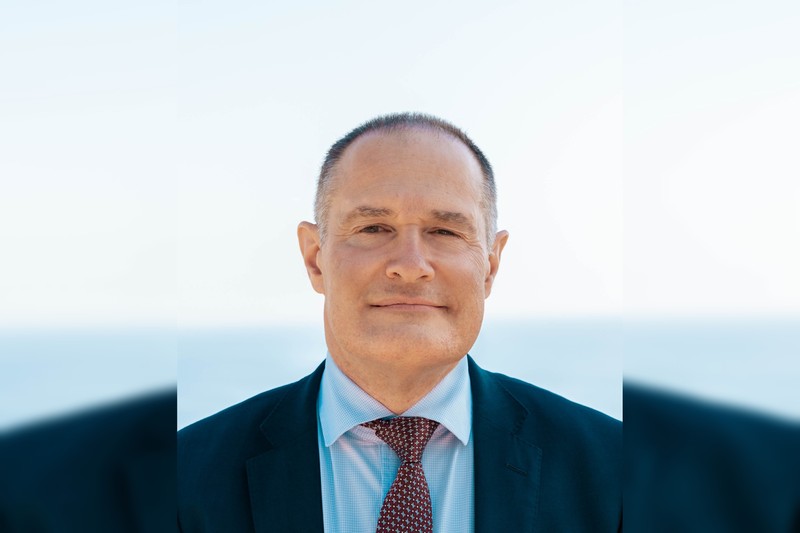
The Paris Court of Appeal has opened a formal investigation into Fabrice Leggeri, the former head of the European Union’s border agency, over allegations of complicity in crimes against humanity.
Leggeri led Frontex from 2015 to 2022, steering the Warsaw-based agency through the height of Europe’s migration crisis. Today, he sits in the European Parliament as a lawmaker for Marine Le Pen’s far-right National Rally.
The investigation, confirmed by a judicial source on March 24, centers on accusations that Leggeri encouraged Frontex personnel to assist Libyan and Greek authorities in intercepting migrant vessels in the Mediterranean — operations that rights groups say prevented asylum seekers from reaching European territory and, in some cases, endangered lives.
A Long-Running Controversy
The probe follows an appeal by the French Human Rights League (LDH) and the migrant rights association Utopia 56, which challenged an earlier decision by an investigative judge to dismiss their complaint. The appeals court ruled on March 18 that the case was “partially well-founded” and warranted further investigation.
Leggeri declined to comment, telling reporters he was unaware of the court’s decision. He has consistently denied wrongdoing throughout years of accusations.
The initial request to investigate Leggeri was filed in 2024, according to LDH President Nathalie Tehio, who told Reuters she expects the probe to take considerable time.
What the Evidence Shows
Leggeri’s tenure at Frontex was marked by mounting allegations that the agency was complicit in illegal “pushbacks” — the forcible return of migrants across international borders without assessing their asylum claims, a violation of both EU and international law.
A 120-page report by OLAF, the EU’s anti-fraud watchdog, concluded that Frontex employees were involved in covering up pushbacks from Greece to Turkey. The report, completed in February 2022 and later made public, found that top managers committed “serious misconduct and other irregularities” by failing to properly investigate or report incidents.
“OLAF concludes, based on the evidence collected during the investigation, that the allegations are proven,” the report stated.
The findings were damning. In one case, a Frontex surveillance plane was instructed to fly away from the scene of an alleged pushback “to avoid witnessing incidents in the Aegean Sea.” A Frontex officer wrote in an August 2020 email that Greek authorities had towed “an overcrowded fragile boat in the night towards the open sea” — a situation that “can seriously endanger the lives of the passengers.”
From Resignation to Parliament
Leggeri resigned in April 2022, shortly before Frontex’s management board was set to consider disciplinary action against him. OLAF had called for sanctions against Leggeri and two other officials for covering up human rights violations.
The European Parliament had also criticized Leggeri personally. A cross-party committee found he had failed to appoint 40 human rights monitors as required by EU law, while staffing his private office with 63 people — more than twice the number working in European Commission President Ursula von der Leyen’s cabinet.
Yet Leggeri’s career did not end with his resignation. In 2024, he was elected to the European Parliament on the National Rally ticket. Should French prosecutors seek to indict him, they would need to request that the Parliament waive his immunity — a process requiring a parliamentary vote.
What the Investigation Signals
The case against Leggeri represents an unprecedented attempt to hold a senior EU border official criminally accountable for migration policies. Rights groups have long argued that Europe’s increasingly hardline approach to border control has produced systematic violations of asylum law, with little consequence for those in charge.
The investigation also casts a shadow over ongoing debates about Frontex’s role. The agency’s budget has grown more than 19-fold since its creation in 2006, with plans to field 10,000 border guards by 2027. Under Leggeri’s successor, Hans Leijtens, Frontex has faced continued pressure over alleged violations in Greece, Bulgaria, and elsewhere.
For now, the investigation proceeds at the pace of French justice. But its implications extend beyond one man: it asks whether Europe’s border policies, and those who enforced them, crossed from harsh politics into criminality.
Sources
- France to investigate ex-EU border chief for alleged crimes against humanity — Reuters
- EU report: Frontex covered up migrant pushbacks from Greece — Associated Press
- As Frontex boss resigns over human rights violations, MEPs refuse budget for border agency — Malta Today
- Poisoned Chalice: Is Frontex Director’s Clean-Up Operation Doomed to Failure? — Balkan Insight
Discussion (9)