 lop News
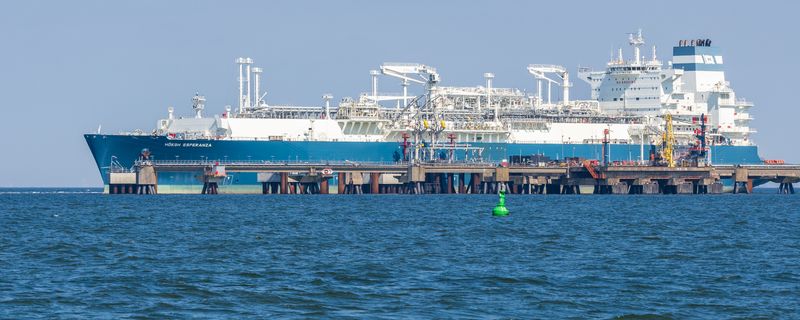
Forty-six billion cubic metres. That is what Europe had in its gas tanks at the end of February — down from 60 bcm a year ago and 77 bcm two years before that. Then Iran started firing missiles at the world’s largest LNG hub.
The Dutch TTF benchmark, Europe’s main gas contract, nearly doubled in the first week of March, leaping from the low €30s per megawatt hour to above €60. By the conflict’s second week, with the Strait of Hormuz effectively closed and QatarEnergy suspending production at Ras Laffan after successive strikes, the benchmark held above €60/MWh.
Oil spiked 8% and gas 20% on March 2 alone — the day Iranian drones struck Ras Laffan and shut down a facility that handles roughly a fifth of global LNG trade. On March 18, a ballistic missile caused what QatarEnergy called “extensive further damage.” The fires, and the production shutdown, continue.
The Diversification That Wasn’t
If this feels familiar, it should. In 2022, Russia’s invasion of Ukraine sent European gas prices to record highs, cratered industrial output, and pushed eurozone inflation to 9%. Brussels responded with REPowerEU, a sweeping plan to wean the continent off Russian energy. By the numbers, it worked: Russian gas fell from 45% of EU imports in 2021 to 13% by 2025. Pipeline gas is being phased out entirely by September 2027.
But diversification is only as good as the alternative you diversify into. The EU replaced Russian molecules primarily with LNG — American LNG in particular now accounts for nearly 40% of the bloc’s total gas imports and close to 60% of its LNG supply. Qatar, the world’s biggest LNG exporter, supplied an estimated 12–14% of Europe’s LNG before the first drone hit.
The problem is structural. Spot-market LNG is a globally traded commodity, and when a chokepoint like Hormuz closes, Europe doesn’t just lose Qatari cargoes — it enters a bidding war with Asian buyers for every tanker still afloat. This is precisely what happened in 2022. It is precisely what is happening now.
The EU didn’t swap one dependency for another so much as swap a pipeline dependency for a shipping-lane dependency — and shipping lanes pass through straits.
The Industrial Squeeze
For Europe’s manufacturing base, the timing is brutal. Euro zone industrial output is already 3% below its 2021 level, battered by high energy costs, Chinese competition, and US tariffs. “Manufacturing optimism in the euro zone is fading,” ING economist Bert Colijn noted, pointing out that industrial production hit its lowest level since 2024 in January — before the first missile struck Qatar.
Steel, chemicals, cement, fertilizers, glass: the energy-intensive sectors that form the backbone of European industry face another round of margin compression. Sustained TTF prices above €50–60/MWh could push electricity and heating bills sharply higher across Germany, Italy, the Netherlands, and Spain. German gas storage sat at 21.6% in late February.
European Commission President Ursula von der Leyen called the impact a “seismic shock.” An EU official offered a more measured take: the crisis “is not as serious yet as the crisis that we faced in 2022.” The word doing the heavy lifting there is “yet.” In 2022, Europe entered the crisis with full storage.
Following the Money Forward
Brussels is reaching for familiar tools — tweaking state-aid rules for energy-intensive industries, activating emergency clauses to cap gas-price pass-through to electricity, promoting accelerated renewables deployment. These are the same levers pulled in 2022. Whether pulling them again, harder, constitutes a strategy or a pattern is the question no one in the Berlaymont seems eager to answer.
Europe’s post-Russia energy architecture was built on two assumptions: that LNG markets would remain liquid and that global shipping lanes would stay open. Three weeks into the Iran conflict, both assumptions are on fire — quite literally — alongside the wreckage at Ras Laffan.
Sources
- How the Iran war could trigger a European energy crisis — Atlantic Council
- How will the Iran conflict hit European energy markets? — Bruegel
- Gas prices nearly double as Europe braces for Iran war energy shocks — Euronews
- Iran war: What can EU leaders do about rising energy prices? — The Irish Times
- Euro Zone Industrial Output Falls Amid Rising Energy Costs — Global Banking & Finance Review
- European Gas Jumps 25% as Iranian Crisis Threatens Global Flows — Bloomberg
- Qatar says Iran attack caused significant damage at Ras Laffan — Al Jazeera
- How the Iran war has left Europe facing yet another energy crisis — BBC News