 lop News
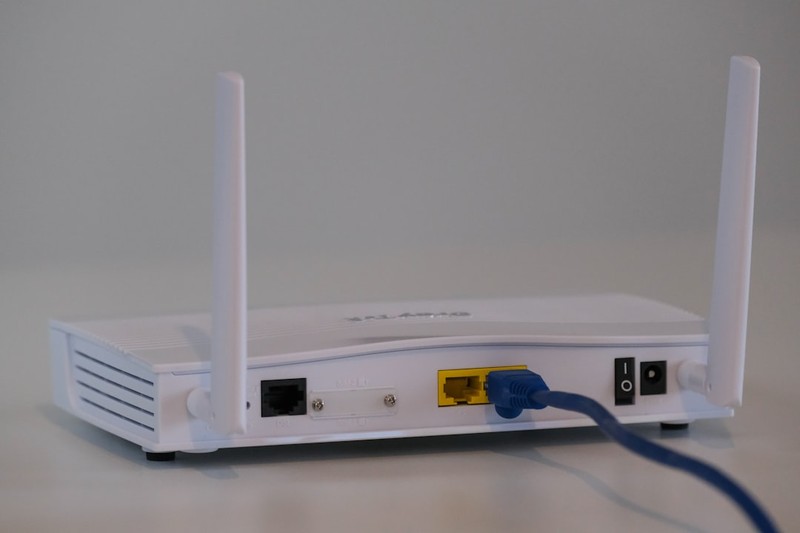
If you’re shopping for a Wi-Fi router in the near future, your options may have just collapsed to near-zero.
The Federal Communications Commission has added all foreign-made consumer routers to its “Covered List,” effectively banning the import and sale of any new models manufactured outside the United States. The rationale is national security. The practical effect is a market disruption that could take years to resolve.
The ruling, announced Monday, doesn’t confiscate routers already in homes. Existing FCC-authorized models can still be sold. But any new device model built abroad—which is to say, virtually every new router—now requires government approval before reaching US consumers.
That approval won’t come easily. Manufacturers must apply for “conditional approval,” which requires disclosing all foreign investors and submitting a plan to move production to US soil.
The Security Argument
The FCC’s justification draws a straight line from foreign manufacturing to cyber threat. In its National Security Determination, the agency states that “routers produced abroad were directly implicated in the Volt, Flax, and Salt Typhoon cyberattacks” that targeted critical American infrastructure between 2024 and 2025.
Those attacks were real. US investigators blamed Chinese state-sponsored actors for exploiting router vulnerabilities to access sensitive networks. TP-Link, a China-founded company that dominates the US consumer market, came under particular scrutiny last year.
The security logic has holes. As The Verge notes, the Volt Typhoon hackers primarily targeted Cisco and Netgear routers—devices designed by American companies. The vulnerability wasn’t foreign manufacturing. It was that those companies had stopped providing security updates for discontinued models.
Foreign assembly didn’t create the opening. Neglect did.
The Manufacturing Reality
Here’s the problem the FCC has not solved: virtually all consumer routers are manufactured outside the United States. Taiwan, China, and Vietnam handle assembly for nearly every major brand—including US-based companies like Netgear and Cisco.
TP-Link, which split from its Chinese parent entity in 2022 and established global headquarters in California in 2024, manufactures its products in Vietnam. In a statement, the company said “virtually all routers are made outside the United States, including those produced by U.S.-based companies,” and predicted the “entire router industry will be impacted.”
The one notable exception is Starlink. Elon Musk’s SpaceX manufactures its Wi-Fi routers in Texas. Beyond that, US consumers are now dependent on whatever inventory already exists and whatever products secure the new conditional exemptions.
Neither the Department of Defense nor the Department of Homeland Security has yet added any specific routers to their exemption lists.
Protectionism in Security Clothing
The Register points out an uncomfortable irony: American intelligence agencies were previously caught intercepting Cisco-made routers mid-shipment to install espionage tools. The same supply-chain vulnerabilities the FCC now cites were once exploited by the US government itself.
There’s also the question of what domestic manufacturing actually solves. A router assembled in Texas by a company with opaque ownership structures presents different risks than one built in Shenzhen by a firm under constant scrutiny. The policy assumes geography determines trustworthiness. That’s a simplification.
The FCC’s move aligns with the Trump administration’s broader push to onshore critical technology manufacturing. Whether this specific intervention improves security or simply restricts consumer choice remains to be seen.
What Consumers Should Expect
In the short term: not much changes. Retailers can sell existing inventory. Your current router works fine. The ban applies only to new device models seeking FCC authorization.
The medium term is murkier. If manufacturers don’t rapidly secure exemptions or build US facilities—a process that could take years—the American router market could stagnate. Consumers accustomed to annual hardware refreshes and competitive pricing may find themselves stuck with 2026 technology indefinitely.
Reddit commenters were not optimistic. “Chances are no one is going to build them in the US when this administration’s policies change every 10 seconds,” one wrote.
FCC Chair Brendan Carr welcomed the decision, calling foreign-produced routers an “unacceptable national security risk.” He did not address how the agency plans to handle the likely supply vacuum its ruling creates.
Discussion (8)