 lop News
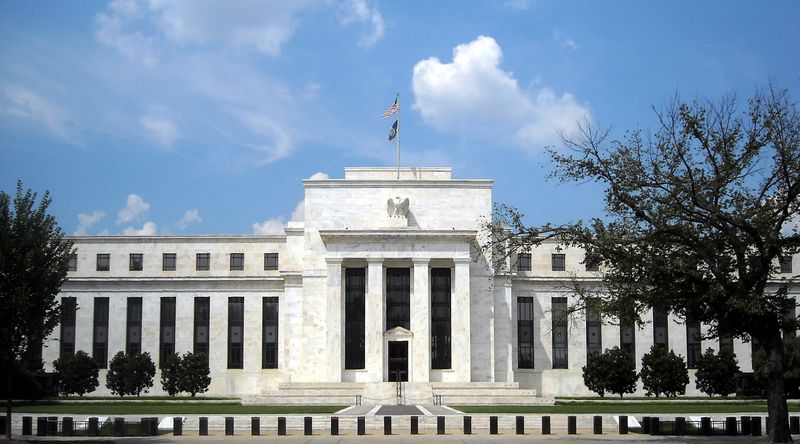
Jerome Powell stood at his podium Wednesday afternoon and did something unusual for a man whose job description is “project confidence in the monetary system.” He admitted he was guessing.
“The thing I really want to emphasize is that nobody knows,” the Fed chair said, referring to the economic fallout from the U.S.-Israeli military strikes on Iran and the resulting near-closure of the Strait of Hormuz. “The economic effects could be bigger, they could be smaller, they could be much smaller or much bigger. We just don’t know.”
Then the Federal Reserve released its quarterly Summary of Economic Projections anyway — a document that requires, by definition, knowing things.
The Art of the Confident Shrug
The Federal Open Market Committee voted 11-1 to hold the federal funds rate at 3.5% to 3.75%, a decision so widely expected that the only suspense was how many euphemisms for “we have no idea” would appear in the statement. The answer: several. The committee added a line noting that “the implications of developments in the Middle East for the U.S. economy are uncertain” — language that does not appear in any previous Fed statement because, until last month, no sitting Fed chair had to price in the effective shutdown of the world’s most important oil chokepoint.
Powell went further in the press conference, revealing that members had privately discussed whether to skip the SEP entirely. “This is one of those SEPs where a number of people mentioned, if we were ever going to skip an SEP, this would be a good one,” he said, “because we just don’t know.”
They published it regardless. The projections showed PCE inflation rising to 2.7% by year-end, up from December’s 2.4% estimate. Core PCE edged up to 2.7% as well, from 2.5% in December. Unemployment held at 4.4%. The dot plot still points to one rate cut this year and another in 2027, though the committee remains divided on whether any cuts will materialize in 2026.
These are numbers dressed up as precision in a world that stopped cooperating with models three weeks ago.
What ‘Data Dependent’ Means When the Data Is on Fire
The Fed’s mantra for two years has been “data dependent.” It sounds rigorous, almost scientific — the central bank as dispassionate empiricist, adjusting policy to the numbers as they arrive. The problem is that the numbers arriving right now are not the kind any forecasting model was built to process.
Brent crude spiked to nearly $110 a barrel on Wednesday. It was $72 before the strikes on February 28. That is a more than 50% increase in less than three weeks, driven by Iran’s retaliatory shutdown of the Strait of Hormuz, through which roughly 20% of global oil and gas flows. Diesel has topped $5 a gallon for the first time since 2022. The national average for regular gasoline hit $3.84, up nearly a dollar from a month ago.
February’s jobs report, released before the worst of the oil shock, already showed employers cutting 92,000 positions. Unemployment ticked up to 4.4%. Private-sector job creation, Powell acknowledged, has ground to a halt. “You’ve got a sort of zero employment growth equilibrium,” he said. “It does have a feel of downside risk.”
The February CPI came in at 2.8%, nearly a full percentage point above the Fed’s 2% target. Producer prices rose 3.4% annually — the largest increase in a year. And those readings predate the bulk of the energy shock. Powell noted that tariffs are still contributing roughly 0.5 to 0.75 percentage points to inflation above target, a drag that existed before a single missile hit Iranian soil.
Michael Pearce of Oxford Economics put it bluntly: 2026’s policy outlook has been “completely scrambled by this new shock.”
What Standing Pat Costs Ordinary People
A rate hold is often described as “prudent” or “cautious.” These are compliments when the economy is merely uncertain. When the economy is hemorrhaging jobs while energy prices spike, standing pat is its own kind of decision — one with costs that show up in household budgets before they show up in Fed minutes.
Mortgage rates rose to 6.35% as of Thursday, up from 5.99% just two weeks earlier, according to industry data. That is not a response to the Fed’s rate decision — it is a response to the inflation expectations that the Fed’s rate decision failed to calm. For a buyer financing $400,000, the jump adds roughly $85 to the monthly payment. Multiply that across a housing market already frozen by affordability concerns and the math gets ugly fast.
Grocery prices climbed 3.1% over the past twelve months through February, according to the Bureau of Labor Statistics. Food-away-from-home — restaurants, takeout, the lunch you buy because you cannot afford to miss a shift — rose 3.9%. Diesel at $5 a gallon means higher shipping costs on everything that moves by truck, which in America is almost everything.
Consumer sentiment, already fragile, has continued to slide. Inflation expectations remain elevated, and expecting inflation has an annoying habit of producing it.
The Stagflation Question Powell Doesn’t Want to Answer
A reporter asked Powell whether the current mix — rising prices, stalling employment, geopolitical supply shocks — resembled the 1970s. He rejected the comparison: “That’s not the situation we’re in. Maybe that’s just me.”
Maybe it is. The 1970s analogy is imperfect; the U.S. economy is structurally different, and inflation has not yet entrenched at double-digit levels. But the playbook Powell is running — hold rates, project calm, wait for clarity — assumes clarity is coming. If the Strait of Hormuz stays shut, if Brent pushes past $120, if the February jobs report was a preview rather than an aberration, then the Fed will have spent months holding steady while the economy moved without it.
The lone dissenter Wednesday was Governor Stephen Miran, a Trump appointee who voted for a quarter-point cut. The message from the committee is clear: we would rather be wrong by doing nothing than wrong by doing something.
Powell’s term as chair ends in May. His nominated successor, Kevin Warsh, faces a confirmation hold from Senator Thom Tillis. Powell told reporters he intends to remain on the board while a Department of Justice investigation into the Fed continues.
Nobody knows when that will be over, either.
Sources
- Fed interest rate decision March 2026: Holds rates steady — CNBC
- ‘Nobody knows’: Oil price shock leaves Fed uncertain about the economy — NBC News
- Fed holds rates steady as war in Iran clouds outlook — The Washington Post
- The Fed holds interest rates steady as the economy faces deep uncertainty — NPR
- Fed holds interest rates steady in 1st move since Iran war spiked oil prices — ABC News
- Jerome Powell says this economy isn’t as miserable as the 1970s — Fortune
- Federal Reserve holds interest rates steady, citing elevated economic uncertainty — CBS News
- Oil prices hit nearly $110 as Iran vows to escalate — Fortune
- Here’s the inflation breakdown for February 2026 — CNBC