 lop News
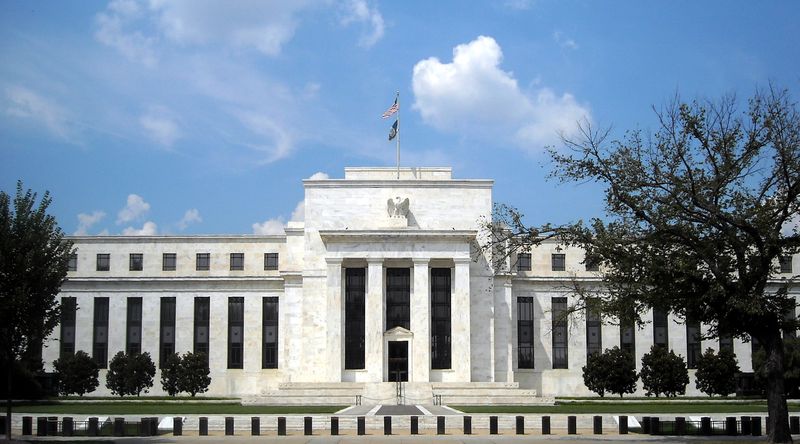
The Federal Reserve will announce at 2 p.m. ET that it is leaving the federal funds rate at 3.5% to 3.75%. Futures markets put the probability at 99%. The decision itself is not the story.
The story is what comes next — or rather, what doesn’t.
The Paralysis
Nine months ago, the Fed was cutting rates. Three consecutive quarter-point reductions through the back half of 2025 brought the benchmark down from 4.5% to its current range. The December dot plot projected one more cut in 2026, with the median estimate pointing to a year-end rate of 3.4%. A gentle glide path. Orderly.
Then the United States went to war with Iran, and orderly left the building.
Brent crude, which was trading below $80 per barrel in late February, has since swung wildly — reaching as high as $120 per barrel, according to Al Jazeera. Shipping through the Strait of Hormuz — which carried some 20 million barrels per day before the conflict — has slowed to a trickle. Gulf oil producers have cut output by at least 10 million barrels per day. A 30-plus-country emergency stockpile release of 400 million barrels, the largest in history, has done little to contain the damage.
The result is an inflation problem the Fed thought it had mostly solved. The Personal Consumption Expenditures index was already showing rising consumer prices in January, before the full force of the energy shock hit. Higher oil means higher transportation costs, higher food prices, higher utility bills. The ripple effects are still being tallied.
Cutting rates into that environment would be institutional malpractice. But the other side of the ledger is no prettier.
The Jobs Problem
The February employment report landed like a cold bucket of data on any remaining optimism. The economy shed 92,000 jobs — against expectations of a 50,000 gain. The unemployment rate ticked up to 4.4%. Labor force participation slid to 62%, its lowest since December 2021. The average duration of unemployment climbed to 25.7 weeks.
These are not numbers that invite tightening. Hiking rates to fight energy-driven inflation while the labor market is hemorrhaging jobs is the kind of policy choice that earns central bankers chapters in cautionary textbooks.
So the Fed sits. It cannot cut. It should not hike. The policy rate stays where it is, and Jerome Powell walks to the podium to explain why doing nothing is the plan.
What to Watch at 2:30
The hold itself is priced in. What matters is the updated Summary of Economic Projections — specifically, the dot plot. In December, the median dot pointed to one 25-basis-point cut by year-end. If that dot holds, Powell is signaling that the Committee still sees easing as the next move, just not yet. If the median shifts to zero cuts, the market will read it as capitulation.
Deutsche Bank analyst Jim Reid expects “minor statement tweaks, including smoothed language on recent labour data and a nod to geopolitical risks.” In Fed-speak, “a nod to geopolitical risks” can mean anything from mild concern to existential dread. The precise wording will be parsed syllable by syllable.
Then there is Powell’s press conference, where the real information tends to leak out. Watch for how he frames the inflation question. If he describes the energy shock as “transitory” — or any synonym thereof — bond yields may ease. If he concedes that core inflation expectations are being contaminated, expect the front end of the curve to sell off.
Traders are currently pricing in no rate cut before October at the earliest, and possibly not until December. Some aren’t pricing in any cut at all. Sonu Varghese of Carson Group put it bluntly: “It’s likely the Fed will not cut rates in 2026 and may even start talking about rate hikes later this year.”
EY-Parthenon’s chief economist has revised the firm’s baseline: “Given our higher headline and core PCE inflation forecast, we have revised our baseline to show only one 0.25-percentage-point rate cut in 2026, likely in December.”
Powell’s Last Acts
This is also Powell’s penultimate meeting as chair. His term ends May 15, with Kevin Warsh nominated as his replacement. A federal judge dismissed DOJ subpoenas against Powell on March 13. The institutional backdrop is, to put it mildly, unusual.
Powell has no incentive to be heroic. He has every incentive to be careful, to acknowledge uncertainty without committing to a direction, and to leave his successor a central bank that hasn’t painted itself into a corner.
The market wants clarity. It will not get it today. What it will get is a hold, a dot plot, and 45 minutes of carefully hedged language from a man who knows every word will be scrutinized — and who has decided that saying as little as possible is the only move left.
Sources
- Fed likely to hold rates steady as Iran war shocks policy debate — Yahoo Finance / Reuters
- Iran war is making it harder for the Federal Reserve to cut interest rates — CBS News
- March Fed Meeting: Live Updates and Commentary — Kiplinger
- Jerome Powell’s penultimate meeting as chairman — Fortune
- February 2026 jobs report — Bureau of Labor Statistics
- Oil prices swing wildly amid Iran war — Al Jazeera
- IEA Oil Market Report - March 2026 — International Energy Agency