 lop News
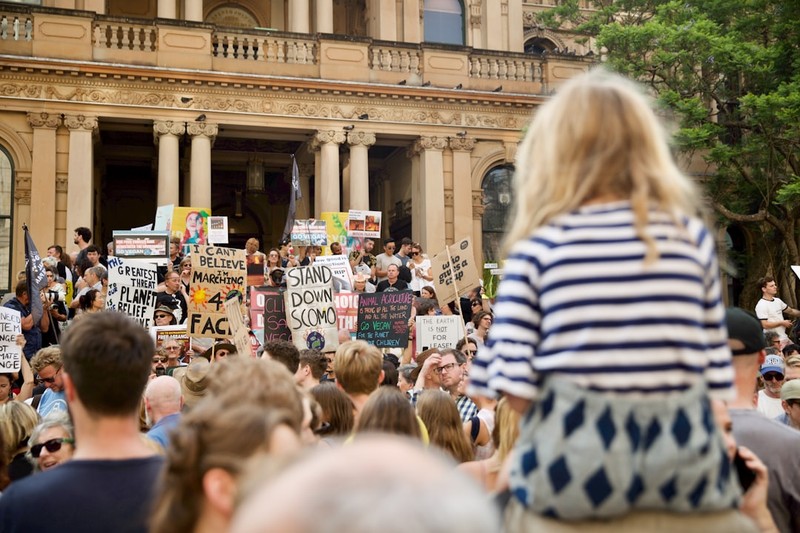
$130,000 for millennials. $165,000 for Gen Z. $185,000 for Generation Alpha.
These are not figures from an insurance adjuster or a tax assessment. They are the estimated lifetime costs that Australians will bear if the world continues on its current emissions trajectory, according to new modelling from Deloitte Access Economics.
The report, authored by a team of young economists and released this week, attempts to do something climate communications have struggled with for decades: translate abstract warnings about planetary boundaries into concrete dollars. The results turn moral arguments into ledgers.
For Generation Alpha—the eldest of whom turn 16 this year—the bill stretches to $185,000 per person by 2070. That is nearly ten times what baby boomers will absorb, and more than double the burden facing Gen X.
What the money buys
The costs are not theoretical. Deloitte’s model estimates damage to worker productivity, infrastructure and property, along with increased healthcare expenses. More frequent natural disasters undermine tourism. Changing weather patterns destabilise agriculture. Food prices rise.
Rhiannon Yetsenga, an associate director at Deloitte Access Economics who co-authored the analysis with Rhiain Powell, Will Neumann and Chern Han Mah, framed the findings in terms of fairness across time.
“For this generation, climate change is not a distant threat but an immediate, lived experience with severe consequences,” Yetsenga said. “These compounded impacts slow growth, inflate costs and jeopardise future wellbeing—especially for younger generations.”
The modelling compared two scenarios: an “insecure” pathway where global warming continues based on current policies, and a “secure” scenario where aggressive action reaches net zero by 2050. The gap between them represents money that could be saved—or will be lost.
The alternative path
If today’s decision-makers drive the action needed to reach net zero by mid-century, the savings are substantial. Millennials would avoid roughly $50,000 in lifetime costs. Gen Z would save about $70,000. Generation Alpha would dodge around $80,000.
The catch: many costs are already locked in. Greenhouse gas emissions linger in the atmosphere for roughly three decades, meaning today’s young people will inherit the consequences of choices made before they were born.
“We have been kicking this can down the road so future generations will have to bear more of the impact of climate change and pick up the tab for more climate action and the costs of adapting to climate change,” said Ken Henry, a former Treasury secretary who commented on the Deloitte findings.
Henry did not mince words about the stakes. “At some point, if climate change is not addressed, it poses an existential risk to human survival.”
The backdrop
The report lands amid fresh evidence that the climate system is already swinging out of balance. The World Meteorological Organization confirmed this week that 2015 to 2025 were the hottest 11 years ever measured. Earth’s energy imbalance—the difference between incoming solar radiation and outgoing heat—reached its highest level in the 65-year observational record in 2025.
The ocean has been absorbing the equivalent of about 18 times annual human energy use each year for the past two decades. That heat will continue warming the planet for centuries.
UN Secretary-General António Guterres characterised the situation bluntly: “Every key climate indicator is flashing red.”
A question of trust
The Deloitte economists found that young Australians rank climate change alongside housing as the issues they care about most—and the areas where they feel least able to trust government action.
“I think there is a lot of goodwill and people trying to do a lot of good things,” Yetsenga said. “But it’s fair to say that young people are frustrated.”
The report advocates for a price on carbon as the most efficient mechanism to drive emissions reduction, though expanding Australia’s safeguard mechanism would also help. More fundamentally, the economists argue that growth models cannot be sustainable if they are not emissions-reducing.
Yetsenga emphasised that action need not come at the cost of prosperity. Australia’s abundance of sun, wind and critical minerals positions it to lead in green industries—if the investment happens now.
“Done right, this could be an opportunity,” she said.
The alternative is a bill that grows larger with each passing year, passed down to those who had no hand in running it up.
Sources
- Australia’s generation Alpha faces $185k bill over lifetime without urgent action on climate crisis, report finds — The Guardian
- Earth’s climate swings increasingly out of balance — World Meteorological Organization
Discussion (8)