 lop News
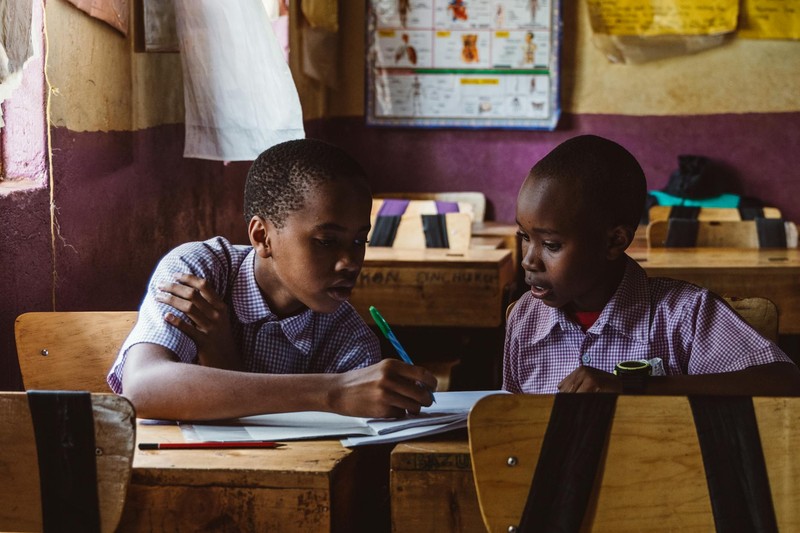
A clinic that won’t be built in rural Zambia. A classroom that won’t open in South Sudan. A vaccination programme that won’t reach a child in Somalia.
These are the units of measurement when a government decides to cut bilateral aid to Africa by 56% — almost £900m by 2028-29. The Foreign Office’s own equality impact assessment spells out the consequences: children, people with disabilities and older people left more vulnerable across Ethiopia, Mozambique, Rwanda, Tanzania and Zambia. Fewer girls will go to school in South Sudan. Women and children in Somalia will lose access to health services.
The cuts are part of more than £6bn being stripped from the UK’s overseas development budget to fund increased defence spending — a decision the Foreign Secretary, Yvette Cooper, told MPs was “not an ideological step” but “a difficult choice in the face of international threats.”
The geometry of cuts
The 40% reduction in overall aid spending will see the UK’s contribution fall to 0.3% of gross national income by 2027 — down from 0.7% as recently as 2021. The steepest falls fall on Africa and the Middle East.
Bilateral aid to Africa drops from £818m in 2026 to £677m by 2029, according to Foreign Office figures. The Middle East and North Africa will receive 58% less UK aid in 2028-29 than in the year before the cuts began. Funding for the Pandemic Fund and the Global Polio Eradication Initiative will end entirely.
Meanwhile, specific allocations are protected: Ukraine, Palestine, Sudan and Lebanon will see funding maintained. By 2029, 70% of all UK geographic support will flow to fragile and conflict-affected states — a tacit admission that development aid has been reoriented toward crisis response rather than prevention.
Partnership not paternalism
The government insists this represents a fundamental shift in how Britain approaches development — what the development minister, Jenny Chapman, called “partnership not paternalism.” Countries such as Mozambique and Pakistan will see direct grants replaced by “partnerships for investment,” drawing on British expertise in financial systems and clean energy.
“Our partners in the Global South tell us they want partnership, not paternalism. Investment, not dependency,” Chapman said.
But aid organisations question whether private investment can fill the gap in contexts of extreme poverty and conflict. Romilly Greenhill, CEO of Bond, the UK network for NGOs, warned that Africa would be “forced to pay the highest price because of the reduced budget.”
The strategic cost
Critics within the government’s own ranks argue the cuts undermine the security they are meant to protect. Sarah Champion, the Labour MP who chairs the international development committee, noted that military officials regard development spending as “the best line of prevention and first defence.”
Fleur Anderson, Labour MP for Putney, put it more bluntly: “Without this, we are not preventing crises; we are simply waiting for them.”
The Liberal Democrat spokesperson Monica Harding warned that Russia or China could fill the vacuum left by British withdrawal — a strategic consequence that may prove more costly than the defence spending the cuts are meant to fund.
A global retreat
Britain is not alone in pulling back. G7 development spending will be 28% lower this year than in 2024. The United States has dismantled USAID; Germany and France are reducing their budgets. But Britain’s cuts are arguably the harshest in the group — a reversal for a country that was the first G7 member to hit the 0.7% target just over a decade ago.
The government says it intends to return to that target “when possible.” But researchers estimate that continuing global cuts could result in more than 22 million avoidable deaths over five years, with a quarter among children under five.
In the meantime, the geometry of British priorities is visible in the numbers: billions more for defence, hundreds of millions less for the schools and clinics that might have made the world more stable before the next crisis arrives.
Discussion (9)