 lop News
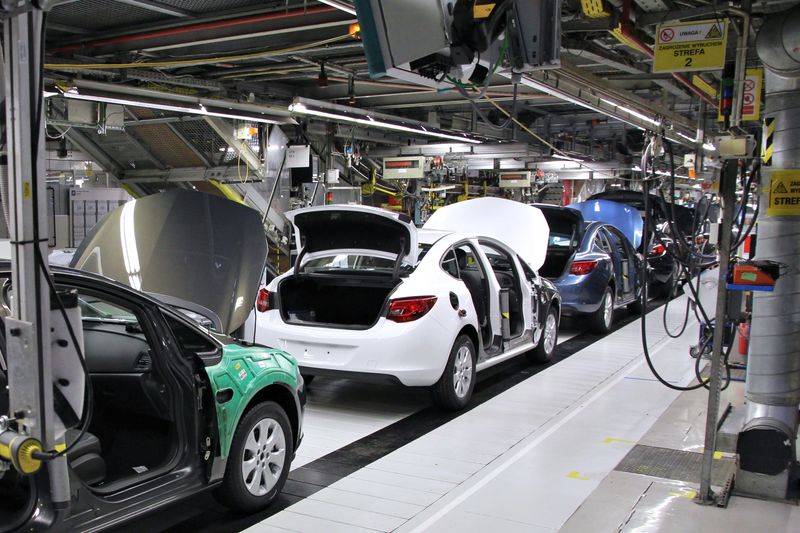
Thirty-five billion dollars. That is what the tariff experiment has cost the auto industry alone since President Trump began stacking import duties on vehicles, parts, steel, and aluminum in 2025. Toyota absorbed $9.1 billion in a single fiscal year. The Detroit Three — GM, Ford, and Stellantis — burned through $6.5 billion combined. Eight other global automakers each topped a billion. The numbers arrive courtesy of Automotive News, and they read less like a policy outcome than a controlled demolition of balance sheets.
The broader manufacturing picture is no kinder. According to Associated Press data, American factories shed 98,000 jobs during Trump’s first full twelve months back in office — the opposite direction from the “Liberation Day” promise of April 2, 2025, when the president announced sweeping tariffs under emergency powers and pledged to bring production home.
The Ledger Doesn’t Lie
Start in northeast Arkansas, where Jay Allen runs Allen Engineering Corp., a company that builds industrial concrete equipment — power trowels selling for up to $100,000 apiece. Allen voted for Trump. He expected deregulation and tax relief. What he got was a 50 percent tariff on the imported steel, engines, gearboxes, and clutches his machines require.
“What’s really sad is the unintended consequences of his tariffs are hurting manufacturing in our country,” Allen told the AP. His payroll fell from 205 workers to 140. The company operated at a loss in 2025. He raised prices 8 to 10 percent and watched demand soften further.
In South Carolina, Glen Calder of Calder Brothers, which makes asphalt paving equipment, saw the hit arrive before the tariffs technically did. “The steel tariffs were the first thing that got my attention,” he said. His steel pricing jumped 25 percent before the tariffs even went into effect on domestic steel — American steelmakers, it turned out, were happy to ride the tariff wave upward whether or not the duties applied to their product.
Promises vs. the P&L
The administration pitched tariffs as a jobs engine. The data tells a different story. A Center for American Progress analysis found that in 45 of 50 states, blue-collar job creation after Liberation Day fell short of Biden-era averages. From April to December 2025, the typical state lost more than 2,500 blue-collar positions rather than gaining the 7,400-plus that had become normal.
Meanwhile, China’s global trade surplus climbed to a record $1.2 trillion. The U.S. goods trade deficit hit $650 billion through May 2025 alone — up $175 billion from the prior year, according to the Council on Foreign Relations. The tariffs collected revenue, certainly: $97.3 billion through July 2025, a 110 percent jump. But American companies have now filed more than $130 billion in lawsuits demanding refunds, and economist Joseph Steinberg estimates the best-case scenario still requires “a decade for manufacturing employment to rise above” pre-tariff levels.
The Legal Wrench
On February 20, the Supreme Court threw a six-to-three wrench into the machinery. In Learning Resources Inc. v. Trump, the justices ruled that the International Emergency Economic Powers Act does not authorize the president to impose tariffs — striking down the Liberation Day duties that had raised more than $160 billion.
Hours later, Trump signed an executive order imposing a 10 percent global tariff under a different statute, Section 122 of the Trade Act of 1974, and then raised it to 15 percent. The Section 232 tariffs on steel, aluminum, and automobiles — the ones bleeding Allen and Calder — were never part of the court challenge and remain firmly in place.
The Bigger Picture
The legal whiplash only compounds the economic uncertainty. One day the Liberation Day tariffs are law; the next, the Supreme Court strikes them down; hours later, a new executive order reinstates a blanket duty under a different statute. Manufacturers cannot plan six months ahead, let alone retool a factory. And the burden of that uncertainty falls hardest on the smallest players.
Ninety-eight percent of American manufacturing establishments employ fewer than 200 people. They do not have Toyota’s capacity to absorb a $9 billion hit and wait for the policy to pass. They are Allen Engineering, cutting 65 jobs. They are Calder Brothers, paying a steel premium that appeared before the tariff ink was dry.
One year after Liberation Day, the liberation has arrived — just not for the people it was promised to.
Sources
- Trump’s tariffs are hurting American manufacturers instead of helping them — BNN Bloomberg / AP
- Trump tariffs cost automakers more than $35 billion since 2025 — Automotive News
- Trump’s Tariff Schemes Have Cost Automakers Over $35 Billion So Far — Jalopnik
- One Year After ‘Liberation Day,’ American Workers Are Feeling the Negative Effects — Center for American Progress
- What Trump Trade Policy Has Achieved Since ‘Liberation Day’ — Council on Foreign Relations
- Supreme Court Strikes Down Liberation Day Tariffs — Tax Foundation
- Trump’s tariffs were supposed to help manufacturers. But instead, they’re hurting — ABC News / AP