 lop News
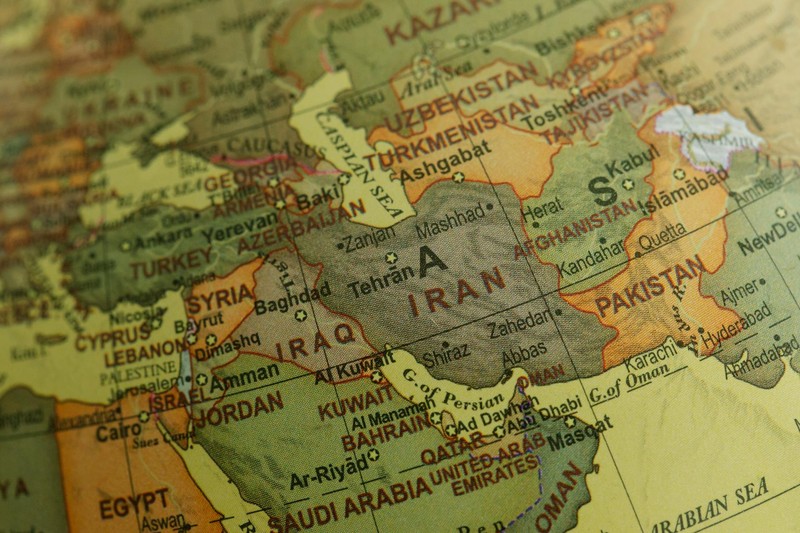
Donald Trump announced Monday that the United States is in ‘very good and productive conversations’ with Iran toward ending the war. Iran’s response was blunt: ‘No negotiations have been held with the US.’
Both statements may be true. What exists between them — messages passed through intermediaries, positions relayed via third parties, diplomatic feelers extended and withdrawn — reveals as much about the fractured state of communication between Washington and Tehran as it does about the prospects for ending the conflict.
The disconnect came hours before Trump’s own deadline to ‘obliterate’ Iranian power plants unless the country reopened the Strait of Hormuz. Instead of strikes, the president announced a five-day pause, telling reporters the US had spoken with ‘a top person’ in Iran and that there were ‘major points of agreement.’
Iran’s parliament speaker Mohammad Bagher Ghalibaf posted on X that reports of talks were ‘fake news’ intended ‘to manipulate the financial and oil markets and to escape the quagmire in which the US and Israel are trapped.’ The foreign ministry acknowledged receiving messages from friendly countries about a US request for negotiations, but insisted no dialogue had occurred.
The backchannel reality
What Trump calls talks, Iran sees as something else entirely. According to an Egyptian official who spoke on condition of anonymity, the US and Iran ‘exchanged messages through Egypt, Turkey and Pakistan over the weekend aimed at averting strikes on energy infrastructure.’ NPR confirmed that backchannel efforts are underway, with regional players working to de-escalate tensions.
This is not negotiation in any formal sense. It is communication through interpreters — some diplomatic, some political, all uncertain.
Turkey’s foreign minister Hakan Fidan has spoken with his Iranian counterpart Abbas Araghchi, as well as officials from Qatar, Saudi Arabia, Pakistan, Egypt and the European Union. Egypt’s president Abdel-Fattah el-Sissi has traveled to Gulf capitals in recent days. Pakistan’s army chief Asim Munir spoke with Trump on Sunday, while Pakistan’s prime minister held talks with Iran’s president Monday.
A Gulf diplomat described Egypt and Turkey as leading the de-escalation effort, adding that ‘for now, it appears they managed to avert an energy catastrophe.’
Leadership questions on both sides
The fog surrounding these communications reflects the chaos inside Iran’s leadership structure. The new supreme leader, Mojtaba Khamenei — who reportedly survived the strike that killed his father — has not appeared in public. Beyond two written messages, nothing has been seen or heard from him.
This creates a fundamental problem: who can actually commit Iran to any agreement? The Islamic Revolutionary Guard Corps appears to be operating with considerable autonomy. President Masoud Pezeshkian has kept a low profile. The foreign ministry issues statements, but its authority over security forces remains unclear.
Iranian officials have reason to distrust any diplomatic process. In the 14 months since Trump returned to office, two previous rounds of nuclear talks were followed by military action. Iranian officials told the BBC that during negotiations in Geneva on February 27, they addressed most US concerns — then Trump launched strikes the next day.
For Iranian decision-makers, the lesson writes itself: negotiation does not prevent attacks.
Israel’s separate war
While Trump talks pause, Israel talks continuation. Prime Minister Benjamin Netanyahu said Monday that he spoke with Trump and believed there was an opportunity to ‘leverage the mighty achievements obtained by the IDF and the US military’ toward a deal. He immediately added: ‘In parallel, we continue to attack both in Iran and Lebanon.’
Israel’s military chief of staff said the fight against Hezbollah ‘has only just begun.’ Lebanon’s president Joseph Aoun called Israel’s latest bridge strikes ‘a prelude to ground invasion.’
The gap between Washington and Tel Aviv is not merely rhetorical. Trump’s five-day pause applies to US strikes on Iranian energy infrastructure. It does not bind Israel, which has continued attacks on Tehran and expanded operations in Lebanon.
What the pause buys
Markets responded to Trump’s announcement with relief — oil prices fell, stocks rose — but the reaction was measured. The pause creates space for mediators but resolves nothing.
Fatih Birol, head of the International Energy Agency, warned Monday that the global economy faces a ‘major, major threat’ from the war’s disruption to energy flows. The crisis has already cut 11 million barrels per day from global supply — more than the combined oil shocks of 1973 and 1979.
For now, regional intermediaries continue to pass messages between capitals that refuse to speak directly. Whether those messages can bridge the gap between Trump’s ‘productive conversations’ and Tehran’s categorical denial depends on actors whose authority over the outcome remains uncertain.
Five days is not much time to find out.
Sources
- Iran denies any talks with US after Trump claims ‘productive’ discussions — Al Jazeera
- Trump says the U.S. is in talks with Iran to end the war, which Iran denies — NPR
- US’ and Iran’s options for ending war narrow the longer it goes on — BBC News
- Trump says Iran is eager for a deal to end the war as he extends deadline — Associated Press
- Middle East crisis live: Iran denies Trump talks claim — The Guardian
- Whose war is it? Trump eyes Iran talks as Israel hints at long campaign — France 24
Discussion (10)