 lop News
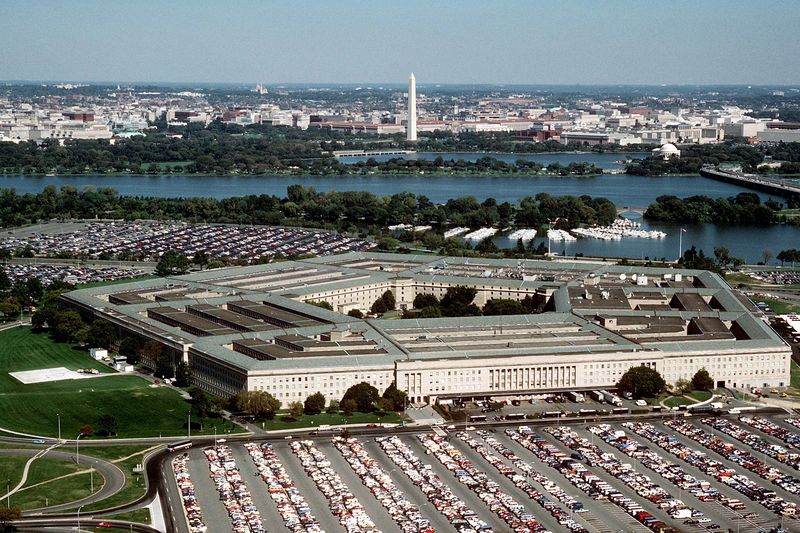
Nineteen days. Twelve billion dollars spent. Seven thousand targets struck. And now the Pentagon wants $200 billion more.
That is the fiscal shape of Operation Epic Fury as of this week — a war charged to a national credit card that, on March 17, ticked past $39 trillion in total debt for the first time. The two numbers arrived on Capitol Hill within hours of each other. Nobody in Washington appeared to notice the timing.
$800 Million a Day and Counting
The $200 billion supplemental request, first reported by the Associated Press and confirmed by Defense Secretary Pete Hegseth, would fund ongoing operations, accelerate weapons replenishment, and rebuild the stockpiles that three weeks of sustained bombardment have chewed through. At roughly $800 million per day since the campaign began on February 28, the burn rate rivals the peak spending months of the Iraq war — except this time the baseline budget is already stretched to breaking.
Hegseth, asked about the figure during a press briefing, offered a phrase that may end up on the invoice: “It takes money to kill bad guys.” He added that the $200 billion number “could move,” which in Pentagon budgeting tends to mean upward.
Chairman Gen. Dan Caine noted that Iran “came into this fight with a lot of weapons,” citing the use of 5,000-pound bunker-buster bombs against underground storage facilities. The implication is clear: destroying a deeply fortified adversary is expensive, and the bill is just getting started.
The Credit Card Statement
The $39 trillion debt milestone — crossed the same week the Pentagon circulated its ask — did not arrive because of Iran. The national debt has been growing by roughly $7.2 billion per day, according to the Joint Economic Committee, and hit $38 trillion just five months ago. Interest payments alone are projected to exceed $1 trillion in fiscal year 2026, nearly triple the $345 billion the government paid in 2020.
But the war accelerates a trajectory that was already alarming. The Congressional Budget Office projects debt held by the public will reach 120% of GDP by 2036, eclipsing the post-World War II record of 106%. A $200 billion supplemental — funded entirely by borrowing, as supplementals almost always are — adds roughly half a percentage point to that ratio in a single stroke.
“Surpassing $39 trillion in gross debt is an embarrassing milestone that both parties have built over decades,” said Maya MacGuineas, president of the Committee for a Responsible Federal Budget. The war did not create the problem. It just made the problem more visible, and more urgent.
The Global Invoice
The cost is not confined to the U.S. Treasury. European natural gas prices have surged more than 60% since the war began. Brent crude has climbed nearly 6% to $113 per barrel. The Strait of Hormuz — through which roughly a fifth of the world’s oil passes daily — remains effectively closed, and the economic damage is radiating outward.
On Thursday, all 27 EU heads of state issued a joint statement calling for the Strait’s reopening and “an immediate comprehensive moratorium on attacks on civilian infrastructure, including oil and gas installations.” France, Germany, Italy, the Netherlands, the United Kingdom, and Japan went further in a separate declaration, expressing “readiness to contribute to appropriate efforts” to secure the waterway — though they pointedly declined to specify what those efforts would look like.
The International Energy Agency has authorized the largest coordinated release of strategic petroleum reserves in history. Belgian Prime Minister Bart De Wever warned that if elevated energy prices “become structural, we’re in deep trouble.”
Who Pays
The honest answer is: borrowers. The $200 billion, if approved, will be financed by issuing more Treasury securities into a market already absorbing $2 trillion in annual deficits. Interest on the debt already exceeds what the government spends on defense in a given quarter — $270 billion in the first three months of fiscal year 2026 alone.
Hegseth says the war is “very much on track” and declined to specify an end date. The debt clock, at least, has no such ambiguity. It moves in one direction.
Sources
- It takes money to kill bad guys: Pentagon seeks $200 billion in new funding for war in Iran — Military Times
- Gross National Debt Reaches $39 Trillion — Committee for a Responsible Federal Budget
- The national debt just crossed $39 trillion — Fortune
- European nations, Japan to join ‘appropriate efforts’ to open Hormuz Strait — Al Jazeera
- Pentagon seeks $200 billion in additional funds for the Iran war, AP source says — AP News via WHSV