 lop News
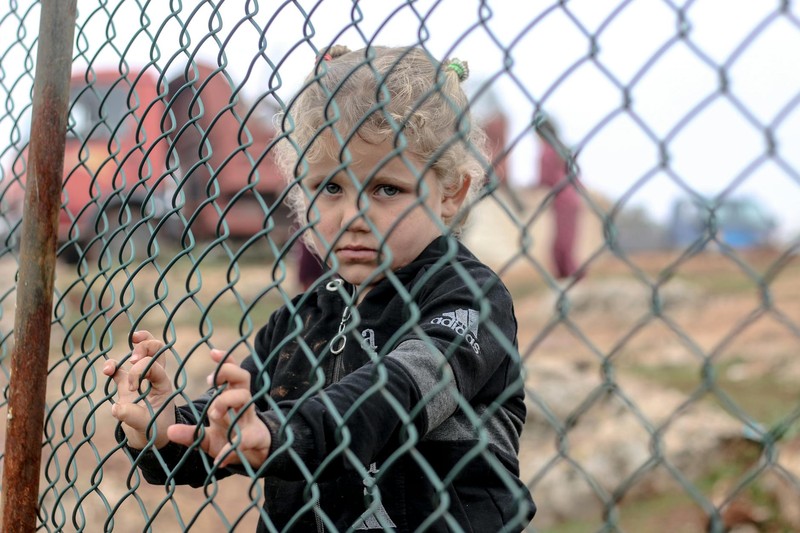
Ayla Lucas is seven years old, has autism, and has spent the past eight days in U.S. immigration detention. She has developed a rash. Until Friday, she was sleeping on a floor mat in an overcrowded processing facility in McAllen, Texas. Her mother, Tania Warner, has been whispering into phones so guards won’t overhear her calls. They are both Canadian citizens. Their paperwork, according to every family member and friend who has spoken publicly, is valid through 2030.
ICE’s proposed solution: the seven-year-old should arrange her own departure from the United States.
From Baby Shower to Detention
The sequence of events is almost mundane in its cruelty. On 14 March, Warner, her husband Edward — a U.S. citizen — and Ayla were driving home to Kingsville, Texas, from a baby shower in Raymondville. At a border patrol checkpoint in Sarita, roughly 130 kilometres from the Mexican border, agents asked for documents.
Edward Warner presented his driver’s licence. Tania presented hers, along with a work visa and her passport. The family had passed through the same checkpoint before without incident, according to CBC News.
Agents took Tania inside for fingerprinting. Fifteen minutes later, they came for Ayla. Neither came back out.
“After about a 40- to 45-minute wait, they came back out and told me that they were not legal to be in the U.S. and that I was free to go,” Edward Warner told Global News.
Conditions and a Bureaucratic Punchline
Mother and daughter were initially held at the Ursula detention centre — the largest U.S. Customs and Border Protection facility — part of the Rio Grande Valley Central processing centre in McAllen. Edward Warner described the conditions relayed to him by his wife: sleeping on the floor, using floor mats as blankets because the only covering provided was thin foil emergency blankets, overcrowding, loud noise, and food he called “terrible.”
On Friday, they were transferred to the Dilley Immigration Processing Center in south Texas, which at least provides mattresses. Dilley, originally opened under the Obama administration, was shuttered during the Biden presidency and reopened in early 2025. It has been repeatedly criticised by lawyers, human rights advocates, and former detainees for disease outbreaks, lack of clean drinking water, and poor medical care, as reported by the Guardian.
It was at some point during this process that Warner was told she could secure release by agreeing to “self-deport” to Canada. “We don’t want that at all,” Edward Warner said. “They are my family.”
The family disputes the basis for detention entirely. Warner moved to Texas five years ago, married Edward roughly three years ago, and holds what the family describes as a valid work visa through 2030, a social security card, and a Texas driver’s licence. Documents provided to CTV News categorise her as a “Lawful Alien Allowed to Work.”
Global News reported one complicating factor: an earlier immigration application was denied because Edward Warner is a registered sex offender in Texas due to an incident when he was a teenager. Their lawyer subsequently found a way to self-sponsor Tania’s visa without attaching Edward’s name to the documents. Later on Friday, Tania told her husband by phone that ICE claimed she had overstayed her authorised stay — a claim the family contests.
Canada Watches From the Sidelines
Ottawa’s response has been conspicuously limited. Global Affairs Canada acknowledged it is “aware of multiple cases of Canadians currently or previously in immigration-related detention in the U.S.” but said it could not exempt citizens from “local legal processes.” Edward Warner said the Canadian consulate told him it could only assist if Tania and Ayla were looking to return to Canada — which, given that their life is in Texas, is not what the family wants.
The diplomatic vacuum has not gone unnoticed. Audrey Macklin, an immigration and refugee law professor at the University of Toronto, told the Guardian that Canada’s representatives should be requesting to visit the family and provide legal counsel. “It raises concerns for Canada … about its own obligations toward its nationals,” she said.
Democratic Texas Congressman Vicente Gonzalez has been more direct. “Tania has a work permit and is part of the fabric of our Kingsville community,” he said in a statement. “We must bring them home and reunite yet another family being ripped apart by this Administration’s rogue immigration enforcement operations.”
A Broader Pattern
Ayla and her mother are not an anomaly. The Globe and Mail reported that an estimated 207 Canadians have been held in ICE custody at some point since January 2025, when President Trump took office — compared with 130 in all of 2024. At least six detained Canadians have been children.
Richard Kurland, a Vancouver-based immigration lawyer and policy analyst, told Global News that even Canadians with fully valid paperwork are now vulnerable. “For any reason, the American immigration system can question your documents,” he said. “Until those questions are answered, you may find yourself in a detention centre.”
Heather Neufeld, an Ottawa-based immigration lawyer, said that getting people released from ICE detention has become “incredibly difficult” and that the only realistic avenue in many cases is federal court — “so nothing quick.”
Kurland put the case in blunter terms: “It’s a heartache to see a seven-year-old autistic child needlessly detained in an immigration pen that has been known to cage children in detention, and PTSD as an outcome would not be uncommon for that child.”
The family has launched a GoFundMe to pay for legal representation. “We’re not billionaires,” said Tania’s cousin Amber Sinclair. “We’re all just trying to make it day by day.”
Ayla Lucas, seven, who hours before her detention was playing with other children at a baby shower, remains in a facility that has been cited for disease outbreaks and inadequate drinking water. Her mother has been told she can leave if she agrees to take herself and her daughter out of the country. Her father, a U.S. citizen, waits at home in Kingsville. Canada is aware of the situation.
Sources
- Seven-year-old Canadian girl with autism and mother detained by ICE in Texas — The Guardian
- Canadian mother and daughter ‘traumatized’ by ICE detainment, husband says — The Guardian
- 7-year-old B.C. girl and her mother being held by U.S. immigration officials in Texas — CBC News
- ICE detains B.C. mom, daughter in Texas, amid bumpy road to citizenship — Global News Canada
- Canadian seven-year-old and mother detained by U.S. immigration in Texas — The Globe and Mail