 lop News
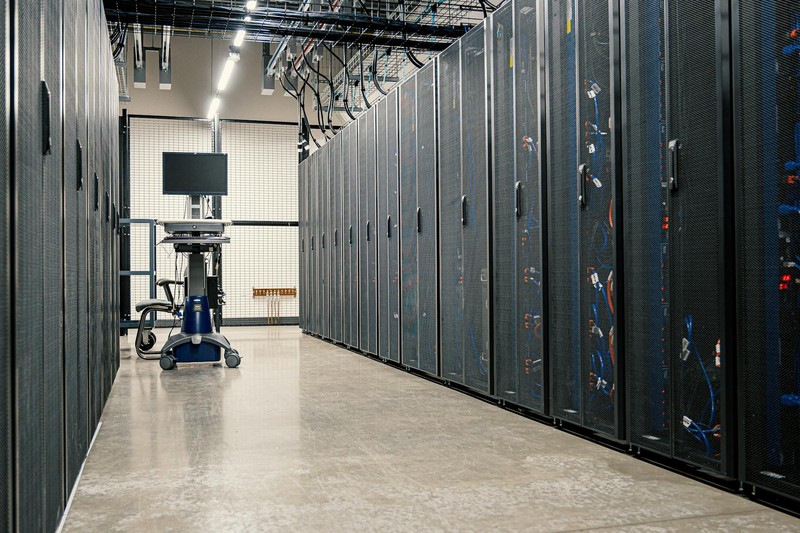
Half a trillion dollars. Ten gigawatts. A 3,700-acre plot in Pike County, Ohio, where the U.S. government once enriched uranium for nuclear warheads.
That is the outline of SoftBank’s latest and most staggering bet: a data center campus so large it would exceed half of all current U.S. data center capacity, planted on the bones of the Portsmouth Gaseous Diffusion Plant — a Cold War facility that enriched uranium from 1954 until 2001 and has spent the last two decades being scrubbed of radioactive contamination.
SoftBank CEO Masayoshi Son unveiled the plan at a ceremony on the Piketon site on March 20, flanked by U.S. Commerce Secretary Howard Lutnick and Energy Secretary Chris Wright. Lutnick called it “the largest bet on a construction facility ever made in history.” Son, not one for understatement, said AI “will transform every industry” and that the Portsmouth campus would “help deliver the next-generation infrastructure needed to unlock those breakthroughs.”
The rhetoric was grand. The numbers, for once, almost justify it.
The Scale Problem
The first phase alone is an 800-megawatt data center, expected online within two years. At full build-out, the facility would reach 10 gigawatts — roughly the output of ten large nuclear reactors, or enough to power seven million homes. SB Energy, SoftBank’s infrastructure subsidiary, is the developer. The project sits within a broader $550 billion Japanese investment commitment to the United States, negotiated as part of a tariff agreement with the Trump administration.
But a 10-gigawatt data center needs 10 gigawatts of electricity. And that is where the story shifts from tech announcement to infrastructure reality.
Burning Gas for AI
SoftBank plans to build 9.2 gigawatts of natural gas-fired generation on-site, at a cost of $33.3 billion. An additional $4.2 billion will go toward new transmission lines built in partnership with AEP Ohio, the regional utility. Son insisted the facility would not draw from the existing grid: “We will not take electricity away from the grid. We will generate the entire electricity use by ourselves.”
That framing is deliberate — it sidesteps the question of grid strain. It does not sidestep the question of emissions.
A natural gas combined-cycle plant emits roughly 490 grams of CO₂ per kilowatt-hour, according to the Global Energy Monitor. At 9.2 gigawatts running at typical capacity factors, the Portsmouth complex could produce on the order of 15 million metric tons of carbon dioxide annually — comparable to the total yearly emissions of a small industrialised nation. That figure does not account for upstream methane leakage from natural gas extraction and transport, which climate scientists have increasingly flagged as a significant and underreported contributor to warming.
Neither SoftBank nor the Department of Energy has published an environmental impact assessment for the project. Energy Secretary Wright, in his remarks, described AI data centers as “the factories of the modern digital age” — a comparison that may prove more apt than intended, given the emissions profile of actual factories.
Ghost Town to Boomtown
For Pike County, the arithmetic is simpler. The region has bled jobs since the enrichment plant shut down. DOE Assistant Secretary Tim Walsh put it plainly: “Over the last 20 years, they’ve lost so many jobs, and now they see this as a way to really grow.”
At peak construction, the project would employ 35,000 workers. Permanent operations would support around 2,500 positions. SoftBank has pledged $40 million to local schools and medical infrastructure. State Senator Shane Wilkin called it “a generational change for this area.”
The economic case is straightforward. The environmental and logistical ones less so. The Portsmouth site remains under active decontamination — airborne neptunium-237 and americium-241 were detected near a local school as recently as 2017 and 2018, according to Department of Energy monitoring data. How that remediation timeline intersects with a construction schedule beginning this year is a question no one at the ceremony addressed.
The Quiet Part
SoftBank’s $500 billion figure deserves scrutiny. The confirmed commitments — $33.3 billion for gas generation, $4.2 billion for transmission, $10 billion for the initial data center phase — total under $50 billion. The remaining $450 billion is aspiration, contingent on demand, financing, and a build-out timeline that stretches years into the future. Son has a history of headline numbers that compress decades of projected spending into a single figure.
None of this means the project is unserious. The gas plants alone represent one of the largest energy infrastructure investments in recent American history. But the gap between the announcement and the reality is wide enough to drive a fleet of natural gas turbines through.
The AI boom needs power. SoftBank is building it the old-fashioned way — by burning things.
Sources
- Pike County to be site of country’s potentially largest data center — WOUB Public Media
- SoftBank plans 9 GW of gas-fired electricity in US to power data centers — Nikkei Asia
- Feds announce huge natural gas plant, data center project in southern Ohio — WOSU Public Media
- Estimating carbon dioxide emissions from gas plants — Global Energy Monitor
- Portsmouth Gaseous Diffusion Plant — Wikipedia