 lop News
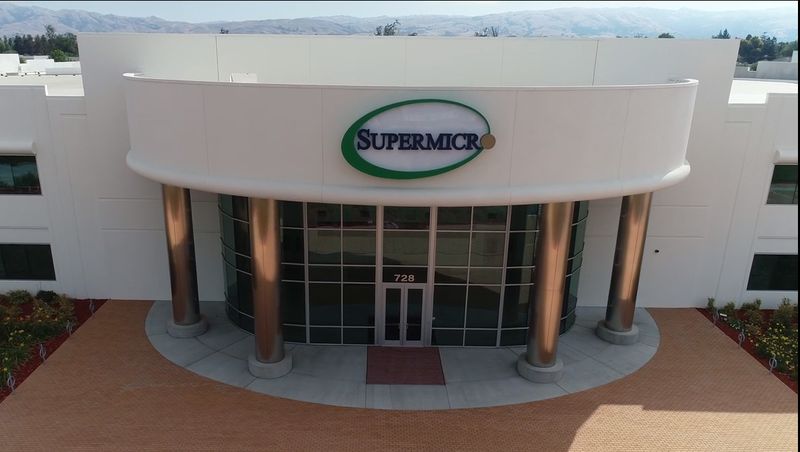
Yih-Shyan “Wally” Liaw co-founded Super Micro Computer in 1993. On Thursday, federal agents arrested the 71-year-old at his California home for allegedly turning the company he built into a pipeline for smuggling billions of dollars in restricted AI chips to China.
The indictment, unsealed in Manhattan federal court, charges Liaw and two associates with conspiring to divert $2.5 billion worth of Supermicro servers — equipped with Nvidia’s export-controlled B200 and H200 GPUs — to Chinese buyers, in direct violation of U.S. export control laws. It is the largest enforcement action yet under the chip restrictions Washington imposed in 2022, and the first to reach inside the C-suite of a publicly traded American technology company.
The Mechanism
The scheme, which prosecutors say ran from 2024 through 2025, was not subtle in scale but elaborate in execution.
According to the Department of Justice, Liaw and co-defendant Ruei-Tsang “Steven” Chang, a sales manager in Supermicro’s Taiwan office, directed an unnamed Southeast Asian company to place purchase orders with Supermicro as though the servers were destined for that company’s own operations. The servers were assembled in the United States, shipped to Supermicro’s Taiwan facilities, then handed off to the front company at a separate location. From there, a shipping and logistics operation stripped the servers of identifying packaging and serial numbers, reboxed them in unmarked containers, and forwarded them to their true destination: China.
A third defendant, Ting-Wei “Willy” Sun, a third-party broker described in the indictment as a “fixer,” allegedly coordinated logistics on the ground. Sun was also arrested Thursday. Chang remains a fugitive.
In a single three-week stretch from late April to mid-May 2025, roughly $500 million worth of servers moved through this channel, according to prosecutors.
Hair Dryers and Dummy Servers
The lengths taken to deceive compliance teams were, by the DOJ’s account, cinematic. When U.S. Department of Commerce auditors came looking, the conspirators allegedly staged thousands of non-working “dummy” servers at a warehouse rented by the pass-through company — physical replicas meant to account for hardware that had already been shipped to China.
Surveillance footage, cited in the indictment, shows individuals using hair dryers to peel serial number stickers off real servers and reattach them to the dummies. In at least one instance, prosecutors allege, Sun photographed the staged servers and sent the images to a compliance auditor who was “off-site enjoying entertainment” paid for by the pass-through company rather than conducting an actual inspection.
Assistant Attorney General John A. Eisenberg described the operation as a “tangled web of lies, obfuscation, and concealment.”
The Enforcement Gap
The charges land at a moment when Washington’s chip export controls face a credibility test. The restrictions, first imposed in October 2022 and tightened multiple times since, are the centerpiece of U.S. strategy to deny China access to the advanced AI hardware it needs for military and surveillance applications. But enforcement has struggled to keep pace with the incentives to circumvent them.
In December 2025, the DOJ’s Operation Gatekeeper dismantled a separate smuggling network that had moved an estimated $160 million in Nvidia H100 and H200 chips to China using straw purchasers and fake branding. The Supermicro case dwarfs that figure by an order of magnitude — and it allegedly originated not from some shadowy reseller network, but from a senior executive at a Nasdaq-listed company with a $15 billion market cap.
Fallout
Supermicro shares fell as much as 14.6% in after-hours trading following the announcement. The company issued a statement calling the alleged conduct “a contravention of the Company’s policies and compliance controls” and said it has placed Liaw and Chang on administrative leave and terminated its relationship with Sun. CEO and Chairman Charles Liang was not named in the indictment.
All three defendants face up to 30 years in prison across three counts: conspiracy to violate the Export Controls Reform Act, conspiracy to smuggle goods, and conspiracy to defraud the United States.
The export controls were designed to hold. Whether the system that enforces them can is now the open question.
Sources
- Supermicro’s co-founder was just arrested for allegedly smuggling $2.5 billion in GPUs to China — Fortune
- U.S. prosecutors charge Super Micro Computer employees with smuggling Nvidia chips to China — CNBC
- Three men charged with illegally smuggling advanced AI chips into China — NBC News
- Super Micro shares slide 14% after co-founder arrested for chip smuggling scheme — Investing.com
- U.S. Authorities Shut Down Major China-Linked AI Tech Smuggling Network — Department of Justice
- Super Micro Computer Issues Statement on Action by U.S. Attorney’s Office — Supermicro