 lop News
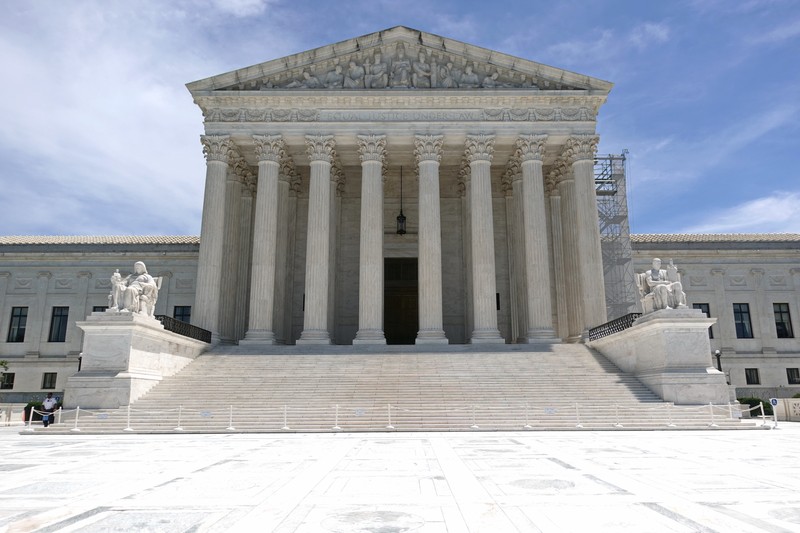
The hypothetical came from Justice Neil Gorsuch: What if, in the days after an election but before a winner is declared, news breaks that a candidate has been colluding with a foreign power?
Mississippi Solicitor General Scott Stewart assured the court that the state does not permit ballot recalls. But the exchange captured the essential anxiety running through more than two hours of oral arguments Monday in Watson v. Republican National Committee: When, exactly, does an election end?
The Supreme Court’s conservative majority appeared ready to answer that question by striking down Mississippi’s five-day grace period for mail-in ballots — and with it, similar laws in more than a dozen states. A ruling is expected by late June, in time to reshape how ballots are counted in November’s midterm elections.
What the Case Is About
At issue is a Mississippi law passed in 2020, with bipartisan and nearly unanimous support in the state legislature, that allows mail-in ballots to be counted if they arrive within five business days of Election Day — provided they were postmarked by Election Day. The Republican National Committee and the Libertarian Party of Mississippi sued in 2024, arguing that the grace period violates federal statutes dating to 1845 that establish the Tuesday after the first Monday in November as “Election Day.”
The challengers contend that “Election Day” means both the casting and the receipt of ballots must occur on that single day. Mississippi counters that voters make their final choices by Election Day when they place their completed ballots in the mail; the state’s receipt of those ballots days later is mere administrative processing.
A three-judge panel of the 5th Circuit Court of Appeals sided with the challengers last year. The Supreme Court agreed in November to hear the case.
The Court’s Conservative Majority Signals Skepticism
Monday’s arguments suggested the court’s six conservative justices are inclined to agree with the challengers.
Gorsuch and Justice Amy Coney Barrett pressed Stewart repeatedly on whether voters truly have made a final choice when they drop a ballot in the mail, given that the Postal Service and other carriers technically permit mail to be “recalled” in some circumstances. Barrett said she wanted to understand Mississippi’s “definition of finality” and what it means to cast a vote.
Justice Brett Kavanaugh raised concerns about public confidence in elections when late-arriving ballots change apparent outcomes — echoing a frequent complaint of President Donald Trump, who has long claimed, without evidence, that mail voting breeds fraud.
Justice Samuel Alito pressed Stewart on what he called “line-drawing problems”: If the court accepts Mississippi’s position, how long could states extend ballot deadlines? Could ballots be counted weeks after Election Day?
The Liberal Justices Push Back
The court’s three liberal justices framed the dispute as a question of federalism — whether states, not courts, should set ballot deadlines.
“The question I think, really, is what did Congress intend with its statement about Election Day?” Justice Ketanji Brown Jackson said. She noted that several federal laws, including those governing military and overseas voting, incorporate state deadlines for receiving ballots — suggesting Congress is aware of and has accepted grace periods.
Justice Elena Kagan observed that the challengers’ historical argument would also undermine early voting, which was unknown when Congress set Election Day in 1845. “Congress couldn’t have conceived of the kind of early voting that we have now,” she said. “It couldn’t have conceived of a thousand other ways in which we administer elections now.”
Justice Sonia Sotomayor went further, accusing the Trump administration’s solicitor general, D. John Sauer, of quoting historical sources “out of context” in his brief.
The Stakes Extend Well Beyond Mississippi
The implications of a ruling against Mississippi would be sweeping.
Fourteen states and Washington, D.C., have grace periods for regular mail ballots, ranging from one day in Texas to 21 days in Washington state. Twenty-nine states count late-arriving ballots from military and overseas voters under similar provisions. In 2024, Washington alone received 127,000 ballots after Election Day.
Alaska faces particularly acute consequences. Eighty percent of the state’s population lives off the road system, weather is unpredictable, and some communities do not offer in-person voting. In 2022, ballots from six rural villages went uncounted because the Postal Service failed to deliver them in time.
Adriane Mohlenkamp, an independent voter in rural Ohio, told the Anchorage Daily News that her state’s now-eliminated grace period had given her peace of mind. “Even if I do my due diligence and return it in enough time, I can’t always anticipate what it does when it leaves my hands.”
States Are Already Scrambling
Anticipating an adverse ruling, some states have moved preemptively. Ohio, Kansas, North Dakota, and Utah eliminated grace periods last year; Minnesota shortened its deadline. Ohio’s Republican governor, Mike DeWine, said he signed the bill reluctantly, preferring the grace period but fearing the court would strike it down and leave insufficient time to adapt.
Election officials warn that a June ruling would create confusion and risk disenfranchising voters who have relied on grace periods for years.
“Eliminating post-election ballot receipt deadlines would affect nearly every aspect of the preparation for and administration of the general election in these states in 2026, just months before it is set to occur,” a group of local election officials wrote in an amicus brief.
Paul Clement, arguing for the challengers, dismissed those concerns. Federal law requires absentee ballots to be mailed to military and overseas voters 45 days before a general election — mid-September. “June would give them plenty of time,” he said.
The Tension at the Heart of Democracy
The case exposes a fault line that transcends partisan politics: the balance between maximizing voter participation and providing certainty in election outcomes. Voters who follow the rules — requesting a ballot on time, filling it out correctly, postmarking it by Election Day — could see their votes discarded through no fault of their own, casualties of postal delays or slow processing.
At the same time, some of the legal briefs in the case have argued that the appearance of elections that shift days after the polls close could undermine public confidence, regardless of whether fraud is occurring. Alito noted that “some of the briefs have argued that confidence in election outcomes can be seriously undermined if the apparent outcome of the election on the day after the polls close is radically flipped.”
What the court decides by summer will answer a question that goes to the mechanics of self-government: whether the franchise belongs to those who act in time, or only to those whose ballots arrive in time.
Sources
- Supreme Court skeptical of laws counting mail-in ballots after election day — NPR
- Court appears ready to overturn state law allowing for late-arriving mail-in ballots — SCOTUSblog
- Supreme Court seems skeptical of allowing states to accept late-arriving mail ballots — AP News
- US supreme court appears poised to limit mail-in ballots ahead of midterms — The Guardian
- Takeaways from arguments in the Supreme Court case that could end grace periods for mail ballots — CNN
- Many states count mail ballots that arrive after Election Day. Those grace periods could go away. — Anchorage Daily News
Discussion (12)