 lop News
Ten days. That’s what stands between the global economy and a gas supply shock that makes 2022 look like a warm-up.
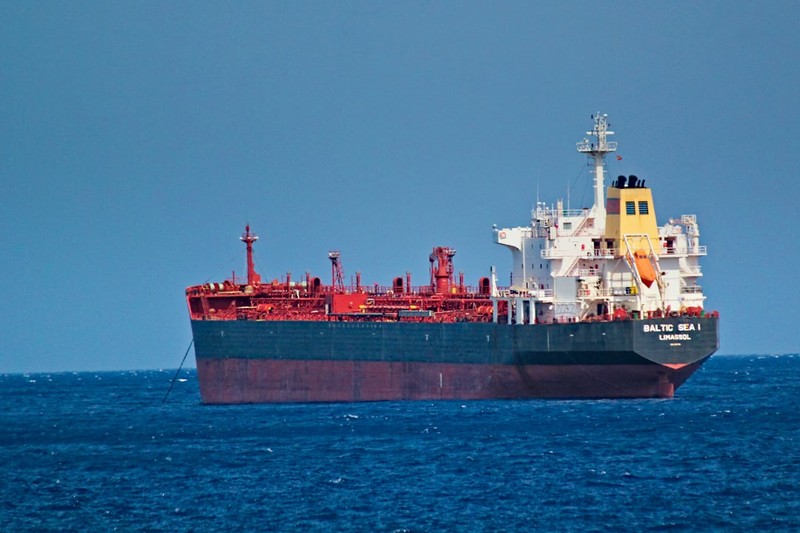
LNG tankers that departed the Gulf before Iran blockaded the Strait of Hormuz are still trickling into ports in Europe and Asia. When the last of them docks, the spigot runs dry. Qatar, which produces a fifth of the world’s liquefied natural gas, halted exports in early March. The ships already at sea are the final cargo — and no one knows when more might follow.
This is the Iran war’s economic reckoning, arriving not with a bang but with a countdown.
The Cliff Edge
The math is brutal in its simplicity. Around 20% of global LNG supply — roughly 83 million tonnes annually — is now locked behind an Iranian blockade. QatarEnergy declared force majeure on its entire output after Iranian missiles struck the Ras Laffan Industrial City complex. Two of Qatar’s 14 LNG trains are damaged and will remain offline for three to five years, according to CEO Saad al-Kaabi.
That’s 12.8 million tonnes of annual production capacity gone until at least 2029.
“I never in my wildest dreams would have thought that Qatar would be — Qatar and the region — in such an attack, especially from a brotherly Muslim country in the month of Ramadan, attacking us in this way,” al-Kaabi told Reuters. The estimated revenue loss: $20 billion per year.
For context: when Russia cut off pipeline gas to Europe in 2022, markets panicked. This is bigger. The physical volume is comparable, but the concentration of supply in fewer hands — and fewer shipping routes — makes the system more brittle.
Asia Takes the Direct Hit
China is Qatar’s single largest customer, importing about 25% of its exports last year — roughly 20 million tonnes. India bought another 9 million tonnes, accounting for nearly one-third of its gas demand. South Korea, Japan, Taiwan, Kuwait, and Pakistan round out the list of exposed buyers.
“The key issue is no longer overall supply availability, but how quickly volumes can be rebalanced across regions,” said Mehdy Touil, an LNG specialist at Calypso Commodities. The problem: there’s nowhere to rebalance from.
Florence Yu at Vortexa puts it more bluntly: “China, India, and Taiwan are among the importers most exposed to this risk.”
Asian LNG prices have surged past European benchmarks for the first time in months. The JKM-TTF spread — the premium Asian buyers pay over European gas — hit a multi-year high above $6 per million British thermal units last week. That’s the arbitrage signal screaming at traders to send every available cargo east.
Europe’s Secondary Pain
Europe receives only 12-14% of its LNG from Qatar. On paper, that’s manageable. In practice, Europe is about to learn what happens when Asia starts hoarding.
“If these cargoes stop, Asia will compete to buy the remaining cargoes in the market, pushing up prices for Europe as well,” said Alex Froley at ICIS. The European benchmark TTF jumped 30% in a single day after the Ras Laffan strikes, then kept climbing.
European storage levels are already 10% below where they were this time last year, depleted by a severe January cold snap. The continent was counting on a quiet spring to rebuild inventories. Instead, it’s fighting Asia for every spot cargo — and losing.
The Capacity That Doesn’t Exist
Here’s what markets keep hoping someone will say: that another supplier can fill the gap. No one can.
“US LNG export infrastructure is already operating near capacity, limiting the ability of American exporters to meaningfully fill the gap,” said Amena Bakr at Kpler. Australia’s projects are running flat. Russia is sanctioned. New capacity won’t arrive for years.
“There’s no spare capacity in the LNG market, so the disruption could be immediate and immense,” said Claire Jungman at Vortexa. Around 1.5 million tonnes of LNG exports are at risk for every week the Strait of Hormuz stays closed, according to Wood Mackenzie.
The damage to Qatar goes beyond the two offline trains. Condensate exports will drop 24%. LPG falls 13%. Helium — critical for South Korea’s semiconductor industry — is down 14%. Qatar’s massive North Field expansion project, meant to add new capacity later this decade, has halted work and faces delays of a year or more.
The Price of Panic
Brent crude is back above $100 per barrel. Some analysts see $130 if the Hormuz closure drags into summer. Gas markets are in what one analyst called “full discovery mode” — finance-speak for prices going wherever fear takes them.
European gas is still far below the €300+ per megawatt-hour peak from August 2022. But that was a supply squeeze. This is a supply amputation.
Shell has already declared force majeure on Qatari cargoes. TotalEnergies expects a 2 million tonne production hit. ExxonMobil, which holds stakes in the damaged LNG trains through its Qatargas partnership, has roughly two-thirds of its global LNG equity tied to Qatari volumes.
“Once critical Gulf energy infrastructure is seen as vulnerable, buyers will price that risk for longer than the initial outage itself,” said Jan-Eric Fahnrich at Rystad Energy.
What Ten Days Buys
The carriers now at sea were loaded before Iran’s first missiles hit. They’re carrying the last Qatari gas that will reach customers for an indefinite period.
After they dock, the question shifts from supply to rationing. Which industries get cut first? How high do prices climb before demand destruction kicks in? How long before European storage hits emergency levels?
QatarEnergy’s al-Kaabi has been blunt about what’s required: “For production to restart, first we need hostilities to cease.” Even then, clearing mines from the Strait of Hormuz and restoring safe navigation could take months.
The war is 23 days old. The energy shock hasn’t fully arrived. Ten days from now, it will.
Sources
- World faces gas supply cliff edge as Gulf’s final LNG shipments approach ports — Financial Times
- Iran attacks wipe out 17% of Qatar’s LNG capacity for up to five years — Channel News Asia / Reuters
- Iran attack may wipe out 25% of Qatar LNG supply in 2026 — Invezz / Rystad Energy
- Iran War Upends LNG Market and Jolts Gas Prices — OilPrice.com
- European gas prices surge as Qatar halts LNG output — Anadolu Agency
- Iran attack on Qatar causes ‘extensive damage’ to massive energy hub — CNBC
- ‘Doomsday scenario’: a visual guide to the oil and gas site attacks — The Guardian