 lop News
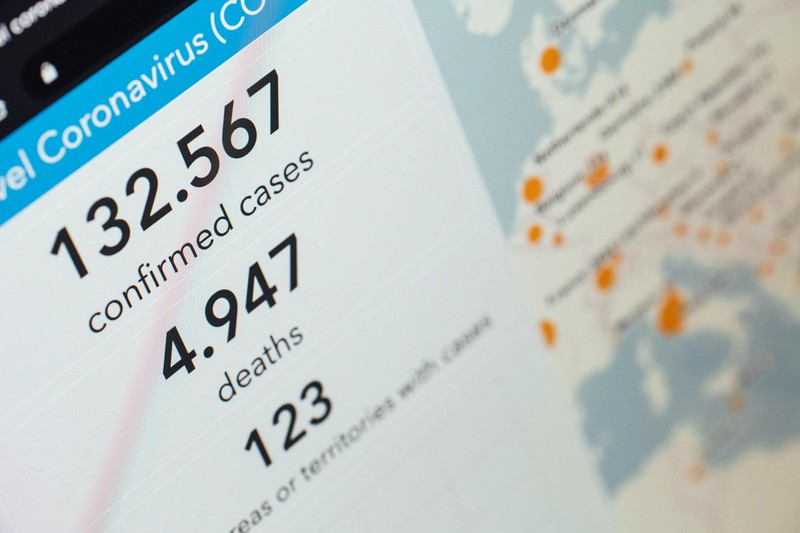
The official U.S. COVID-19 death toll for 2020 and 2021 stands at roughly 840,000. A study published Tuesday in Science Advances argues the real number is closer to 996,000.
The gap — approximately 155,500 deaths — represents people who likely died of COVID-19 but whose death certificates attributed the cause to something else: pneumonia, diabetes, cardiac arrest. They died outside hospitals, often untested, in the early chaos of a pandemic that overwhelmed the country’s patchwork system for investigating deaths.
What the Model Actually Did
Previous attempts to estimate uncounted COVID deaths relied on excess mortality calculations — comparing total deaths to historical baselines. That approach tells you how many extra people died, but not why. A heart attack victim whose treatment was delayed by hospital overcrowding and an untested COVID patient both register as excess deaths. The distinction matters.
The Boston University-led team took a different route. They trained a machine learning model on 5.7 million death records of adults aged 25 and older, published by the Centers for Disease Control and Prevention. The training data came from hospital deaths during 2020-2021, where COVID testing was nearly universal, giving the model a reliable baseline of what COVID-19 deaths looked like on paper — the combinations of comorbidities, demographics, and contributing causes listed on certificates.
The model then examined death certificates for people who died outside hospitals and whose deaths were attributed to other causes. It flagged cases where the pattern of recorded information closely matched known COVID deaths.
“Our antiquated death investigation system is one key reason why we fell short of accurate counts, particularly outside of big metropolitan areas,” said Andrew Stokes of Boston University, the study’s senior author.
Where the Deaths Went Missing
The undercount was not evenly distributed. Southern states showed the largest gaps, with an estimated 31% difference between official and predicted COVID death counts. Alabama, Oklahoma, and South Carolina were specifically identified.
January 2021 — the pandemic’s deadliest month in the U.S. — accounted for roughly 35,000 of the missing deaths alone.
The demographic pattern is stark. Hispanic, American Indian, Alaska Native, Asian, and Black Americans were disproportionately represented among the uncounted dead. The study also found higher rates of undercounting among people with lower incomes, less education, and worse pre-pandemic health — populations who were less likely to have access to hospitals or testing in the first place.
“These findings suggest that the U.S. death investigation system undercounted COVID-19 deaths unevenly, hiding the true extent of inequities,” the researchers wrote.
Why the Gap Existed
Three structural factors explain most of the undercount. First, at-home COVID testing was scarce in 2020 and much of 2021. Someone who fell ill and died at home without a test would not receive a COVID-19 designation on their death certificate.
Second, the U.S. death investigation system is fragmented. Many rural counties rely on elected coroners who may lack medical training, rather than board-certified medical examiners. The quality of cause-of-death determinations varies enormously by jurisdiction.
Third, political dynamics around COVID testing and reporting created additional inconsistencies in how deaths were classified across jurisdictions.
What the Number Means Now
Adding 155,500 deaths to the official count doesn’t change what happened. But it changes what we know about what happened — and more specifically, to whom. The revised figure means roughly one in six COVID deaths during the pandemic’s first two years went officially unrecognized. For public health planning, that distinction between 840,000 and nearly one million is not academic. It determines which communities are understood to have been hardest hit, and which get resources the next time around.
Sources
- Applying machine learning to identify unrecognized COVID-19 deaths recorded as other causes of death in the United States — Science Advances
- More than 150,000 uncounted COVID-19 deaths occurred early in the pandemic, a study finds — AP News / ClickOrlando
- Updated death toll shows the US grossly undercounted COVID deaths early on — Gizmodo
- As many as 1 in 5 COVID-19 deaths went uncounted during the pandemic’s first 2 years — PhillyVoice