 lop News
Two aircraft carriers’ worth of Marines are steaming toward the Persian Gulf. The Strait of Hormuz, through which a fifth of the world’s oil passes, has been effectively sealed since March 4. Brent crude closed Friday above $112 a barrel, up 60 percent in three weeks. And the president of the United States says he is thinking about wrapping things up.
“We are getting very close to meeting our objectives as we consider winding down our great Military efforts in the Middle East with respect to the Terrorist Regime of Iran,” Donald Trump posted on Truth Social on Friday, marking the strongest signal yet that the White House sees an off-ramp from the conflict it launched alongside Israel on February 28.
Hours later, speaking to the Navy Midshipmen football team at the White House, Trump went further. Iran “had a navy two weeks ago. They have no navy anymore,” he said, adding that the war was going “extremely well” and that Iranian leaders were “all gone” — “nobody left to talk to.”
The Gap Between Words and Warships
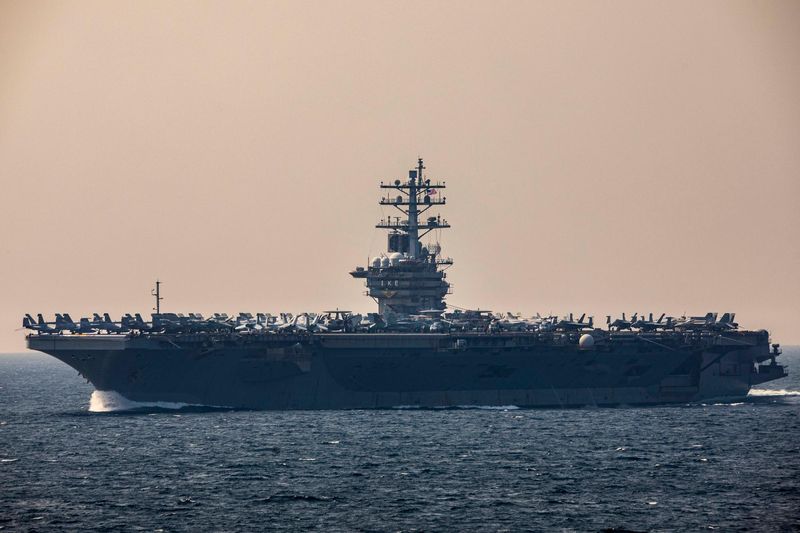
The rhetoric sits uneasily alongside the operational reality. The USS Boxer Amphibious Ready Group, carrying some 2,200 Marines from the 11th Marine Expeditionary Unit, departed California this week and will take roughly three weeks to reach the Gulf. The USS Tripoli group, with more than 2,000 additional Marines, is already en route from Japan. Pentagon officials have prepared detailed plans for potential ground operations, including a possible blockade or occupation of Kharg Island, Iran’s main oil export terminal.
A U.S. official, speaking on condition of anonymity, poured cold water on the notion that an end is imminent. “He just said we are getting close,” the official told reporters. “In the meantime, the U.S. military is striking hard and continuously. It will be a couple of weeks.”
Trump himself explicitly rejected the concept of a ceasefire. “You don’t do a ceasefire when you’re literally obliterating the other side,” he said, adding flatly: “I think we have won.”
Hormuz: Victory Without the Waterway
The most striking element of Trump’s framing is what it leaves out. The Strait of Hormuz — the chokepoint whose closure has triggered what the International Energy Agency calls “the largest supply disruption in the history of the global oil market” — does not appear in the administration’s definition of victory.
Trump made the point explicitly: “The Hormuz Strait will have to be guarded and policed, as necessary, by other Nations who use it — The United States does not!” He added that the strait would “open itself” once Iran’s threat was “eradicated.”
That framing converts a strategic liability into someone else’s problem. The United States imports relatively little Persian Gulf oil, but its European and Asian allies do not enjoy that luxury. Since Iranian forces declared the strait closed and began attacking commercial shipping — at least ten vessels struck, killing seven seafarers according to the International Maritime Organization — major container lines including Maersk, CMA CGM, and Hapag-Lloyd have suspended all transits.
American consumers are not insulated. The national average for a gallon of gasoline hit $3.91 on Friday, a 27 percent increase since February 28. Diesel climbed 31 percent to $5.16, rippling through supply chains.
‘Cowards’ and the Coalition That Isn’t
In a separate Truth Social post, Trump called NATO allies “COWARDS” for refusing to help reopen the strait, branding the alliance a “paper tiger” and warning: “We will REMEMBER.” He called the operation “a simple military maneuver” and argued there was “very little danger” for participating nations.
The allies pushed back carefully. Leaders from Britain, Canada, France, Germany, Italy, the Netherlands, and Japan issued a joint statement expressing “readiness to contribute to appropriate efforts to ensure safe passage through the Strait.” The language was deliberately measured — offering logistical support, not combat troops.
France’s President Macron captured the European posture: defending international law and promoting de-escalation was “the best we can do.” No allied nation has expressed willingness to enter the conflict directly.
Britain went furthest, authorizing the use of U.S. bases on British territory to strike Iranian missile sites that have targeted shipping — framed as “collective self-defence of the region” rather than participation in the war.
The Ledger So Far
Three weeks of Operation Epic Fury have produced a lopsided but incomplete result. The U.S. and Israel have degraded Iran’s air force, navy, missile batteries, and air defenses. Multiple senior Iranian leaders have been killed, including Revolutionary Guard spokesperson Ali Mohammad Naini, struck by Israel on Friday. Israeli forces hit targets in and around Tehran during Nowruz, the Persian New Year, and struck Iran’s South Pars gas field a day earlier.
Iran’s capacity to retaliate has not been extinguished. Iranian drones attacked Kuwait’s Mina Al-Ahmadi refinery overnight, igniting fires. The Revolutionary Guard disputed claims that its military was destroyed, insisting it was “producing missiles even during war conditions.” Supreme Leader Mojtaba Khamenei released an audio statement claiming a “crippling blow” had been delivered to Iran’s enemies. Tehran has threatened to target “recreational areas and tourist destinations” worldwide.
The human toll is severe. Thousands have been killed and millions displaced since strikes began, according to Al Jazeera. On the American side, 232 service members have been injured, with 10 seriously wounded.
What ‘Winding Down’ Means
The phrase “winding down” does real diplomatic work: it signals intent to exit without committing to a timeline, a ceasefire, or the resolution of the Hormuz crisis. It declares objectives met while 4,000-plus Marines are still in transit. It claims victory while the waterway that makes the conflict a global economic emergency remains shut.
Trump listed his war aims on Friday: preventing an Iranian nuclear weapon, destroying its conventional military, dismantling its industrial base, and protecting Gulf allies. By some of those metrics, particularly the degradation of Iran’s conventional forces, the campaign has delivered results. By others — the security of Gulf shipping, the stability of global energy markets, the protection of allies who are now being called cowards — the ledger is considerably less clear.
The war is three weeks old. The president says it is nearly over. The Marines are still shipping out.
Sources
- Trump says he mulls ‘winding down’ the Iran war, even as more Marines head to Mideast — NPR
- Trump: No Iranian leaders left to talk to, says war going ‘extremely well’ — Al Jazeera
- ‘Cowards’: Trump slams NATO over lack of support in US-Israel war on Iran — Al Jazeera
- Iran war live updates: Trump calls NATO allies ‘cowards’ — CBS News
- Trump says he’s considering ‘winding down’ US military operations — South China Morning Post
- Trump mulls ‘winding down’ Iran war — Channel News Asia