 lop News
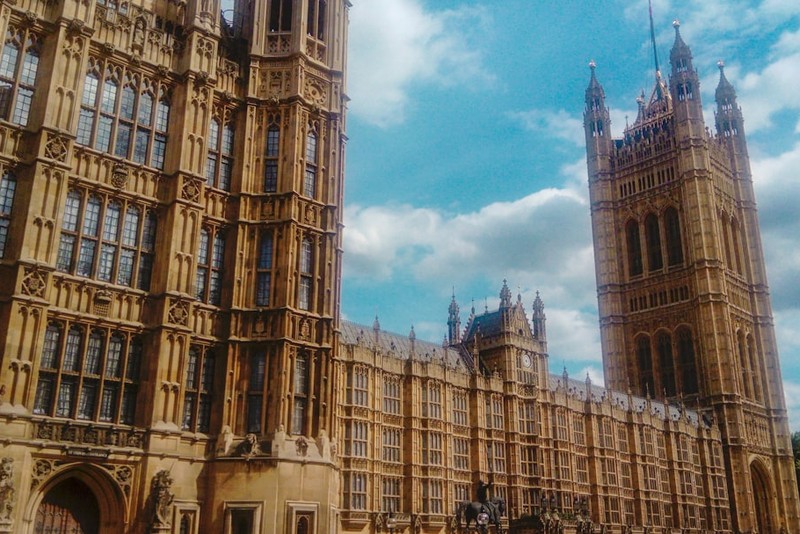
Ninety-two men held seats in the British Parliament for no reason other than who their fathers were. On 18 March, that arrangement — nearly a millennium old — quietly ended.
The House of Lords (Hereditary Peers) Act 2026 received royal assent this week, severing the last formal link between aristocratic bloodline and legislative power in the United Kingdom. When the current parliamentary session concludes, expected around May, the remaining hereditary peers will walk out of the Lords chamber for the final time. No barricades were required. No guillotines. Just a bill, some ping-pong between chambers, and a rubber stamp from the Crown.
The Last of the Line
While 92 seats were reserved for hereditary peers under the 1999 compromise, only 88 are currently occupied. Those 88 are, to a person, male. Their average age is 69. Not one woman sits among them — the last, Margaret of Mar, the 31st Countess of Mar, retired in 2020. Most hereditary peerages pass only through male lines, a rule that long predates the current debate.
Politically, they lean rightward: 45 sit as Conservatives, 33 as crossbenchers, four as Labour, four as Liberal Democrats, and two as non-affiliated. They have averaged 21 years of service, considerably more than the 14-year average for life peers. Their attendance record, at 58 percent, actually exceeds the House average.
These are not, in other words, idle aristocrats collecting dust on the red benches. But the principle that troubled reformers was never about work ethic. It was about the door they walked through to get there.
“It is seemingly so wild that anybody in this day and age could inherit the right to legislate,” said Eleanor Doughty, author of Heirs and Graces. “It’s quite bonkers!”
A Very British Revolution
The roots stretch to 1066, when William the Conqueror parcelled England among his Norman barons and summoned them to counsel. Where France eventually settled the question of aristocratic power with a revolution, and most of continental Europe followed in the 19th century, Britain chose incrementalism. The Parliament Acts of 1911 and 1949 curbed the Lords’ ability to block legislation. Tony Blair’s 1999 reform ejected roughly 600 hereditary peers but left 92 as a temporary compromise — “temporary” lasting 27 years.
Prime Minister Keir Starmer’s government introduced the bill on 5 September 2024. It cleared the Commons by November. The Lords, asked in effect to vote for their own partial abolition, debated the bill across five committee sittings before passing it in July 2025. Final agreement between the two chambers came on 10 March 2026.
Charles Courtenay, the 19th Earl of Devon, accepted the outcome with a grace that felt distinctly of the institution. “I wish I could do more, but my time is up,” he told NPR. “The House of Lords does need to be more representative.”
Reform, Not Abolition
The act does not transform the Lords into an elected chamber. Twenty-six Church of England bishops retain their seats, and hundreds of life peers — appointed, not born into the role — remain. The Earl Marshal and the Lord Great Chamberlain will continue their ceremonial duties, though they lose voting rights unless separately appointed as life peers.
In a concession that blunted opposition, the government offered life peerages to some Conservative and crossbench hereditary members, meaning a number will return to the chamber they were just expelled from — this time by appointment rather than ancestry.
Starmer has signalled further reform by summer 2029, including a mandatory retirement age of 80 for all peers and, eventually, an elected upper house. A 2024 poll found only one in seven Britons supports the current system.
Carmen Smith, Baroness Smith of Llanfaes, captured the mood of reformers inside the chamber itself. “I’m working to get rid of my job,” she said. “I don’t believe my position should exist.”
The Contrast Abroad
The timing is worth noting. Britain is streamlining its legislature at a moment when democratic institutions elsewhere are under visible strain — the United States mired in partisan paralysis, the European Parliament fractured by populist insurgencies, several democracies flirting with strongman politics. Westminster’s quiet act of self-reform, voted for by the very people it displaces, stands as a counterpoint: messy, compromised, incomplete, but functioning.
It is, perhaps, the most British revolution imaginable. No drama. No martyrs. Just a thousand years of inherited privilege, ended by parliamentary procedure and a polite round of applause.
Sources
- End of an heir-a: The U.K. abolishes aristocrats’ right to inherit Parliament seats — NPR
- Who are the last hereditary peers? — The Constitution Unit, UCL
- Why Hereditary Nobles are Losing Seats in the House of Lords — Northeastern Global News
- House of Lords (Hereditary Peers) Bill — Progress of the bill — House of Commons Library