 lop News
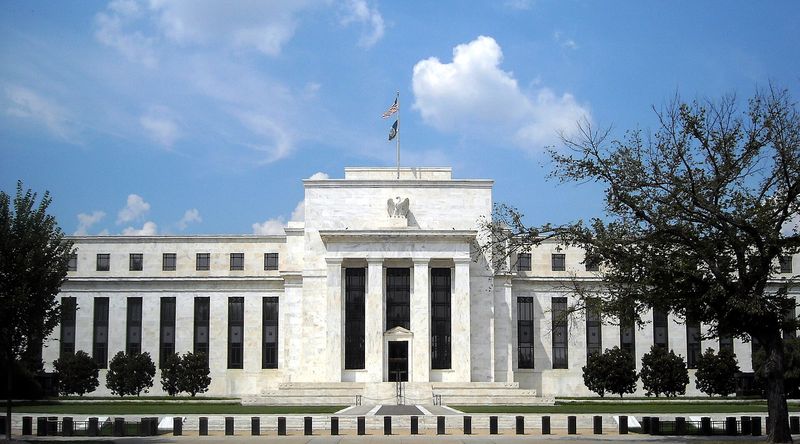
The Dow Jones Industrial Average lost 768 points on Wednesday — a 1.6% drop that punched through to a new closing low for 2026 — after the Federal Reserve held interest rates steady and Chair Jerome Powell conceded that inflation is proving more stubborn than the central bank had hoped.
The S&P 500 fell 1.36%. The Nasdaq shed 1.46%. With the Dow now down more than 5% month-to-date, the blue-chip index is on pace for its worst month since 2022. The sell-off accelerated in the final hour of trading as Powell’s press conference made clear that relief is not coming soon.
The Fed’s Diagnosis
The Federal Open Market Committee voted 11-1 to keep the federal funds rate in the 3.5% to 3.75% range. The lone dissenter, Governor Steven Miran — a former White House economist — voted for a quarter-point cut. He did not get company.
The updated dot plot held the median year-end rate projection at 3.4%, implying a single 25-basis-point cut this year, unchanged from December. But the composition shifted: Powell noted that “four or five people went from two to one” projected cut, a hawkish drift that traders read correctly as the Fed pulling back from whatever easing ambitions it had.
The economic projections told the story in numbers. The committee raised its 2026 PCE inflation forecast to 2.7%, up from 2.4% in December. Core PCE — the Fed’s preferred gauge, which strips out food and energy — also climbed to 2.7% from 2.5%. GDP held roughly steady at 2.4%. Unemployment stayed at 4.4%.
“The forecast is that we will be making progress on inflation, not as much as we had hoped, but some progress on inflation,” Powell said. Read that twice. The chair of the Federal Reserve just told the country that the best the central bank can promise is less failure.
The Oil Problem the Fed Can’t Solve
The inflation outlook is inseparable from the Iran conflict. Brent crude closed at $103.42 a barrel on Wednesday, its highest since August 2022, after reports of fresh attacks on Iranian production facilities sent prices up 3.2% in a single session. West Texas Intermediate settled at $96.21. Oil prices have surged roughly 40% since the US-Israeli strikes on Iran began late last month.
The knock-on effects are already at the pump. U.S. gasoline prices have risen nearly 80 cents in the past month. Diesel has climbed $1.34 to just under $5 a gallon — a cost that feeds directly into freight, food, and virtually every supply chain that moves physical goods.
Michael Pearce, chief U.S. economist at Oxford Economics, warned that rising energy costs will “put big, upward pressure on inflation in the near term” while simultaneously restraining consumer spending. That is the textbook definition of a trap: prices rising and demand falling at the same time.
Sal Guatieri, senior economist at BMO Capital Markets, put it more bluntly: “The US economy now faces its second stagflation-like shock inside a year,” referring to the tariff turbulence of spring 2025.
Gold Cracks, Too
In a market where everything is supposed to go somewhere for safety, even gold broke. Spot gold fell below $5,000 an ounce earlier this week, hitting $4,969.34 — down more than 6% since the Iran strikes began, after an initial spike above $5,400. The yellow metal, up 15% year-to-date despite the recent pullback, is being sold not because fear has subsided but because investors need cash. When margin calls come, even safe havens get liquidated.
No Good Options
The labor market offers no counterargument. February brought 92,000 job cuts. December and January payroll gains were revised downward. Over the past six months, the economy has produced virtually no net new jobs.
The Fed’s post-meeting statement acknowledged that “uncertainty about the economic outlook remains elevated” and that the “implications of developments in the Middle East for the U.S. economy are uncertain.” Both sentences are true. Neither is comforting.
Powell holds the line because cutting rates into an oil-driven inflation shock would be reckless and raising them into a stalling labor market would be cruel. The market’s judgment on Wednesday was that being stuck is its own form of bad news. Seven hundred and sixty-eight points’ worth.
Sources
- Dow tumbles more than 750 points to new closing low for 2026 — CNBC
- Fed interest rate decision March 2026: Holds rates steady — CNBC
- Dot plot: Fed still expects to cut rates once this year — CNBC
- The Fed holds interest rates steady as the economy faces deep uncertainty — NPR
- Gold falls through $5,000 even as war spikes stagflation fears — BullionVault
- U.S. stocks sink on worries about inflation as gold falls below $5,000 — PBS
- Iran Kharg Island: What an attack means for oil markets — CNBC