 lop News
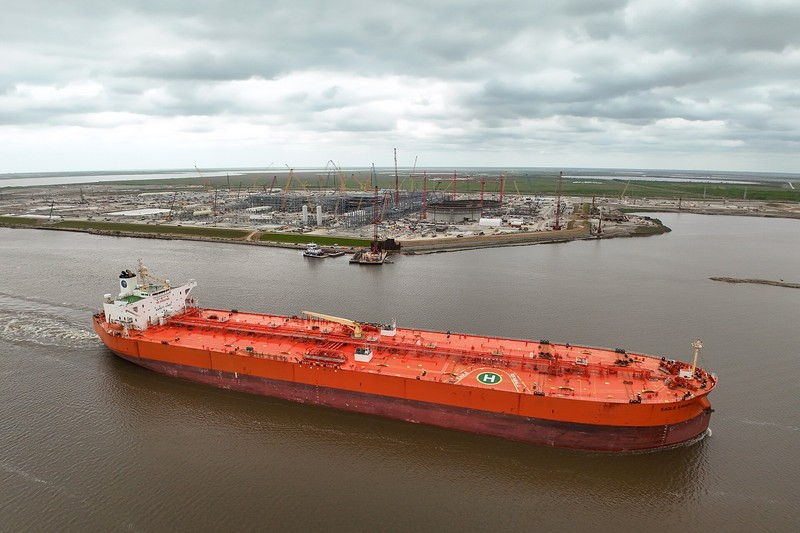
The United States is simultaneously at war with Iran and hawking Iranian crude. If that sentence reads like a contradiction, that’s because it is one — and on Friday, the Treasury Department formalized it with a 30-day general license authorizing the sale of Iranian oil already loaded onto tankers.
The math is blunt. Treasury Secretary Scott Bessent says the waiver will “quickly bring approximately 140 million barrels of oil to global markets.” That sounds enormous until you measure it against the hole it’s meant to fill: the Strait of Hormuz blockade has removed roughly 15 million barrels per day from global flows, according to NPR’s analysis of the supply gap. The 140 million barrels cover about nine days of that shortfall. Bessent himself framed the fix as lasting “10 or 14 days.”
So what happens on day 15?
The Ledger
The Office of Foreign Assets Control’s license permits the delivery and sale of Iranian crude oil and petroleum products loaded onto vessels before 12:01 a.m. ET on March 20. The window closes April 19. Excluded from the deal: Cuba, North Korea, and Russian-occupied Ukrainian territories. Everyone else can buy.
Bessent was candid about the target. The oil had been “hoarded by China on the cheap,” he told Fox Business, referring to Beijing’s longstanding practice of snapping up sanctioned Iranian crude at steep discounts. The waiver redirects those barrels from Chinese warehouses to the open market — at market prices. Brent crude closed Friday at $112.19 per barrel, up 3.26%. West Texas Intermediate settled at $98.32, up 2.27%. Both remain roughly 60% above pre-conflict levels.
“In essence, we will be using the Iranian barrels against Tehran to keep the price down as we continue Operation Epic Fury,” Bessent said, a line that deserves a second read. The Treasury Secretary is openly describing a policy of selling a country’s own natural resources to finance a war against it. Whatever you think of the strategy, the quiet part is now fully audible.
A Pattern, Not a Pivot
This is not the first time Washington has reached for the sanctions toolbox in reverse. The Iranian waiver is the administration’s third in roughly two weeks. Earlier this month, the Treasury authorized purchases of Russian crude under similar terms, unlocking an estimated 130 million barrels. Combined with the Iranian release, that’s approximately 260 million barrels of previously sanctioned oil entering the market — alongside more than 400 million barrels released by 32 International Energy Agency member nations from strategic reserves.
The sheer volume of emergency measures tells the story the administration won’t. Operation Epic Fury, launched February 28 with coordinated U.S.-Israeli strikes on Iranian military and nuclear facilities, triggered exactly the energy crisis that analysts had warned about for years. Iran’s response — missile barrages on Gulf state infrastructure, attacks on merchant shipping, and a de facto closure of the Strait of Hormuz — has produced what analysts say is the largest supply disruption in global oil market history.
Iraq declared force majeure at all foreign-operated oilfields this week. Drones struck two Kuwaiti refineries. Gulf state pipeline capacity that bypasses the Strait can reroute only about 5 million of the missing 20 million barrels per day. The arithmetic, as one energy economist told NPR, is “brutal.”
Who Buys, and at What Cost
The 140 million barrels are not sitting neatly in one place. They’re distributed across tankers scattered around the globe — many anchored outside the Strait itself, unable to transit. Buyers willing to take sanctioned-then-unsanctioned Iranian crude will need to navigate not just logistics but reputational risk. The license expires in 30 days. Any contract signed now carries the implicit question: does this barrel come with a lawsuit in May?
China, Iran’s largest oil customer, has the infrastructure and the indifference to sanctions risk to absorb most of these barrels regardless. Iran’s oil ministry, for its part, disputes the premise entirely, claiming the country “basically has no surplus crude oil left on the water.” If that’s true, Bessent’s 140-million-barrel figure is aspirational. If it’s not, Tehran is lying about its own inventory while Washington profits from it.
Citi analysts now project Brent climbing to $120 per barrel within three months, with a bull-case scenario of $150 if disruptions intensify. Senate Minority Leader Chuck Schumer has already attacked the Russian oil waivers as giving “Putin a huge financial boost.” The Iranian version invites a sharper critique: the administration is funding the war’s price tag by monetizing the enemy’s assets, a move that only makes sense if you’re confident the war ends before the oil does.
The April 19 Question
The 30-day window is the tell. It signals that Washington expects — or hopes — the conflict’s worst energy disruptions will ease within a month. If they don’t, the administration faces a choice between extending the waiver (effectively making permanent a policy of selling Iranian oil during an active war against Iran) or letting it lapse and watching prices resume their climb toward the $150 mark analysts now consider plausible.
Midterm elections are in November. Gasoline prices vote before people do.
Sources
- US approves sale of Iranian oil at sea in move to ease crude supply crisis — South China Morning Post
- US issues 30-day sanctions waiver for sale of Iranian oil at sea — Nikkei Asia
- Trump administration temporarily lifts sanctions on Iranian oil at sea amid soaring prices — CBS News
- US to ‘unsanction’ Iran oil — then use it against Iran? What it means — Gulf News
- Why it’s so hard for world leaders to bring down oil and gasoline prices — NPR
- Oil tops $112 after Iraq declares force majeure due to Iran war — CNBC