 lop News
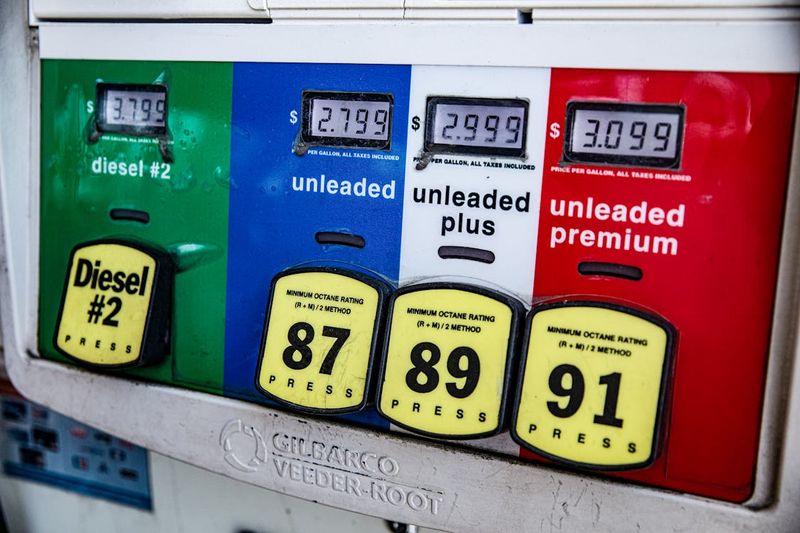
The average American household got a $748 bump in their tax refund this year, courtesy of the One Big Beautiful Bill Act. The average American household will spend an additional $740 on gasoline this year, courtesy of Operation Epic Fury. That is not a rounding error. That is a wash.
The Stanford Institute for Economic Policy Research published the figure on Monday, and it lands like an audit on the administration’s claim that the OBBBA is putting real money back in Americans’ pockets. It is. The war is taking it right back out.
The Ledger
The math is straightforward. The nonpartisan Tax Foundation estimates the OBBBA — which eliminated taxes on overtime and tipped income, and raised the SALT deduction cap from $10,000 to $40,000 — reduced individual income taxes by roughly $129 billion for tax year 2025. Because the IRS never adjusted withholding tables to account for the new law, that money is arriving as fatter refund checks rather than larger paychecks. The average refund this filing season sits at $3,742, up 10.6% year-over-year, according to IRS data through late February.
The refund checks are real. They are just arriving at the worst possible time.
Since the U.S. and Israel launched joint strikes against Iran on February 28, the national average price of regular gasoline has climbed from $2.98 to $3.84 per gallon — a 29% spike in under three weeks. Diesel is worse: up 35%, from $3.76 to $5.07 a gallon, its highest level since 2022. Brent crude is trading near $111 a barrel, up more than 40% from roughly $67 before the first missiles flew.
The trigger is the Strait of Hormuz. Twenty percent of the world’s crude oil passes through that waterway, and it is effectively closed. The Stanford researchers’ $740 household figure assumes the strait stays blocked for three weeks. If it reopens sooner, the damage shrinks. If it doesn’t — and there is no sign that it will — it gets considerably worse.
The Bear Case Is Ugly
Stanford’s estimate is the base case — and it is generous. It assumes a three-week disruption. If the strait stays closed longer, or if crude prices remain elevated into summer, the household cost climbs well past the refund. At current prices, the entire $129 billion in OBBBA tax savings is at risk of being consumed by energy costs alone.
“If families have to spend more filling the tank and buying food, they spend less on restaurants, travel, clothing, home goods and everything else,” said Paul Dietrich, a strategist at Wedbush Securities.
Gas is just the headline number. Diesel drives the trucks that stock the shelves, and at $5.07 a gallon, those costs are already filtering into grocery prices. Patrick De Haan at GasBuddy said, “Can’t underscore what a massive jolt this is to logistics.” JPMorgan estimates U.S. inflation could climb from 2.4% to above 3%.
Mortgage rates have crept up too — the 30-year fixed has risen from 5.9% to 6.41% since the strikes began, as bond markets price in persistent inflation. For anyone hoping to buy a house with that refund check, the purchasing power just took a second hit.
Who Gets Hit Hardest
The distribution matters. The OBBBA’s tax benefits skew toward higher earners — the SALT cap increase alone is worth nothing to households that don’t itemize, which is most of them. But gasoline is brutally regressive. A family in rural Kansas driving 30 miles to work doesn’t get to choose a shorter commute.
California drivers are paying $5.56 a gallon on average. One Shell station in San Francisco was photographed at $6.50 on March 12. In those markets, the war hasn’t just eaten the refund. It has eaten the refund and started on the savings account.
Max Kahn at Coresight Research put it bluntly: the refunds might “mute the impact of increased gas prices,” but “it’s not going to create the bump that it might’ve otherwise created.”
Rockets and Feathers
Stanford’s Neale Mahoney invoked an old principle from energy economics: rockets and feathers. Prices rocket up when input costs rise. They float down like feathers when costs fall. Even if Operation Epic Fury ended tomorrow — even if the strait reopened this afternoon — the pump price would take weeks or months to retreat.
The administration pitched the Big Beautiful Bill as a tangible win for working families. The data doesn’t dispute that. It just notes that the win arrived at the same time as a war, and the war bills faster.
Sources
- Iran war threatens to erase the economic bump from bigger tax refunds — NBC News
- Surging U.S. gas prices could erase bigger tax refunds, analysis finds — CBS News
- Tax Refunds and the One Big Beautiful Bill Act — Tax Foundation
- U.S. gas prices reach highest level since 2023 — Fortune
- The Iran war and surging oil prices are affecting consumers — PBS News
- How Much is the War in Iran Costing You? — Time